
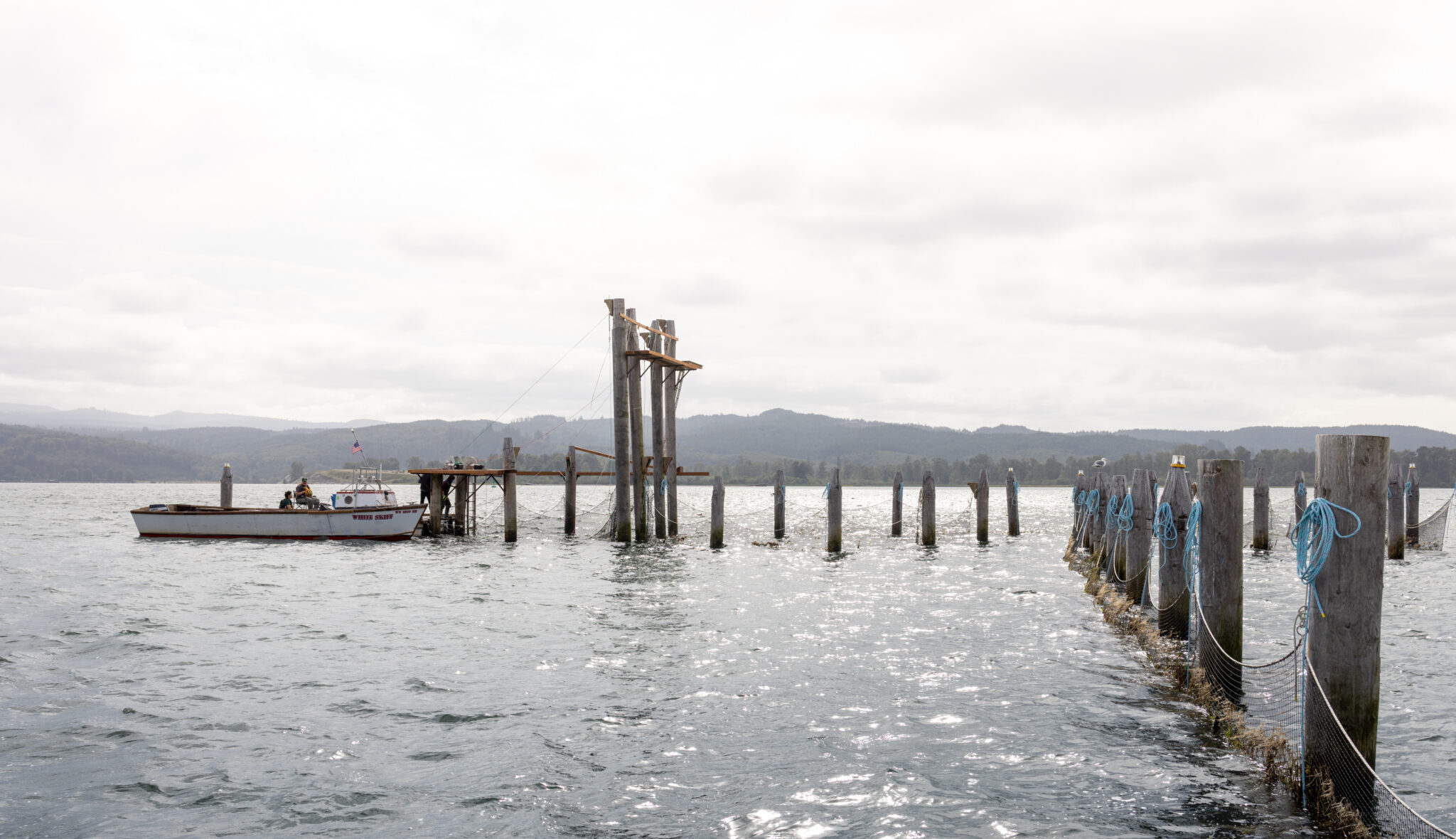
In early August, Wild Fish Conservancy (WFC) was thrilled to return to the Columbia River to assist progressive commercial fishers in the historic lower Columbia River Emerging Commercial Fishery, a newly established commercial fish trap fishery now operating in its second year. This groundbreaking fishery represents the pinnacle of sustainability, operating in-river to preserve marine prey for endangered orca whales, protecting all encountered wild salmon and steelhead for recovery, and enabling local fishers to selectively harvest hatchery-origin Chinook and coho that could otherwise harm and interbreed with threatened wild salmon populations.
This year’s work builds on more than a decade of research that WFC conducted alongside commercial fishing partners on the lower Columbia River to develop and refine contemporary fish trap technology as a sustainable, river-based alternative to gillnetting.
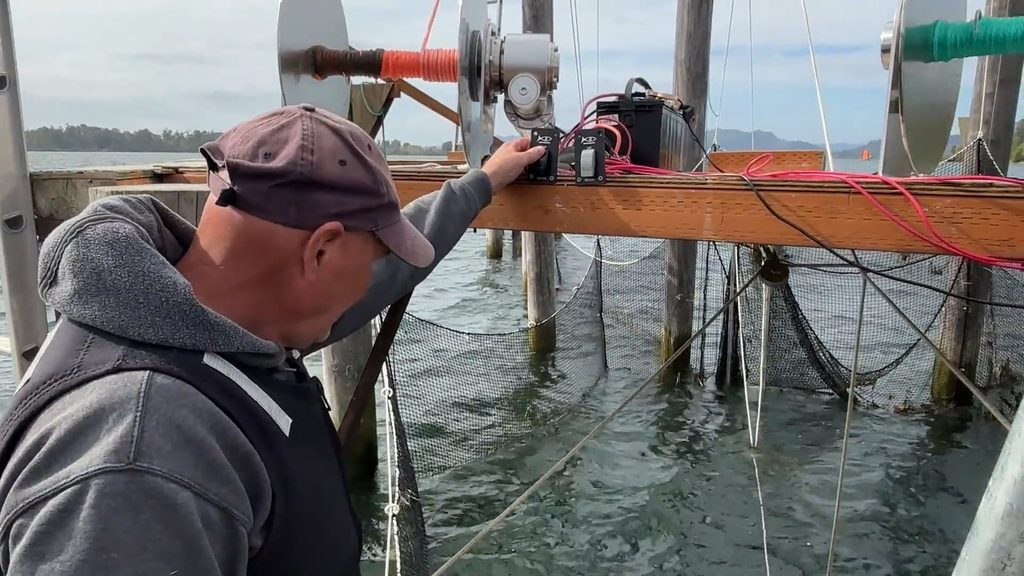
Figure 1: Commercial fisher Mike Clark lowering the pot at the Hunting Islands fish trap.
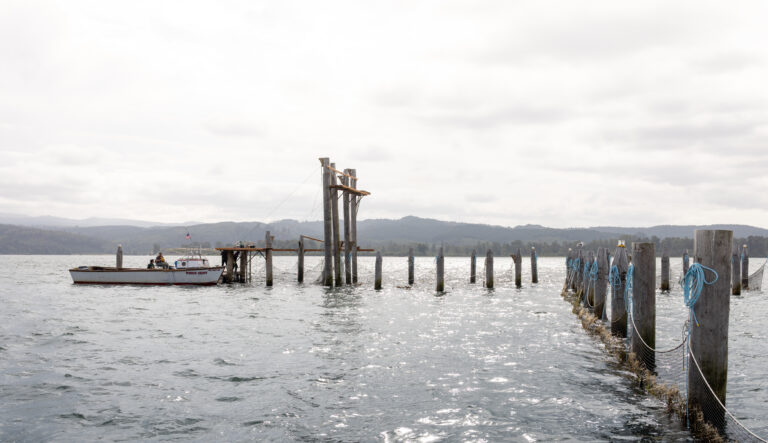
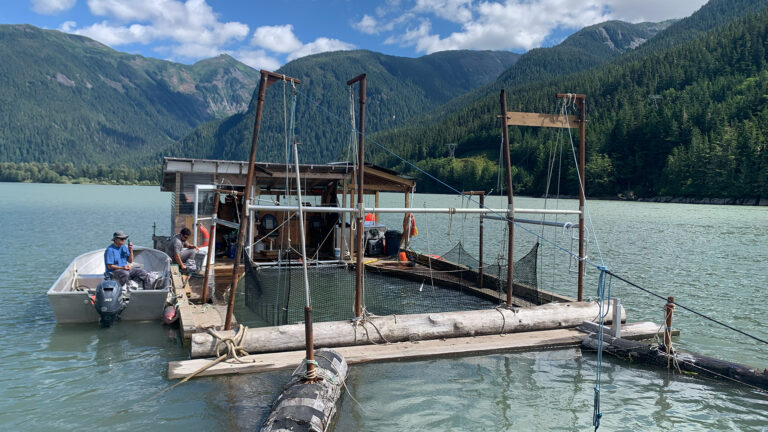
Fish traps consist of a series of untreated pilings and attached nets. The nets are strategically designed to prevent gilling and entanglement, allowing the tool to passively corral returning salmon for live sorting and safe release. Over a decade of investigation, WFC’s groundbreaking research demonstrated that fish traps can enable commercial fishers to selectively harvest abundant hatchery-origin stocks while releasing threatened wild salmon and steelhead with survival rates near 100 percent. Because the tool is strictly river-based, it also helps preserve marine prey for orca whales.
Following more than ten years of engineering, testing, and researching fish trap technology, WFC’s staff plays a much different role today than in years past. Since securing the approval and authorization of the commercial fish trap fishery two years ago, our focus is supporting fishers in achieving successful outcomes.
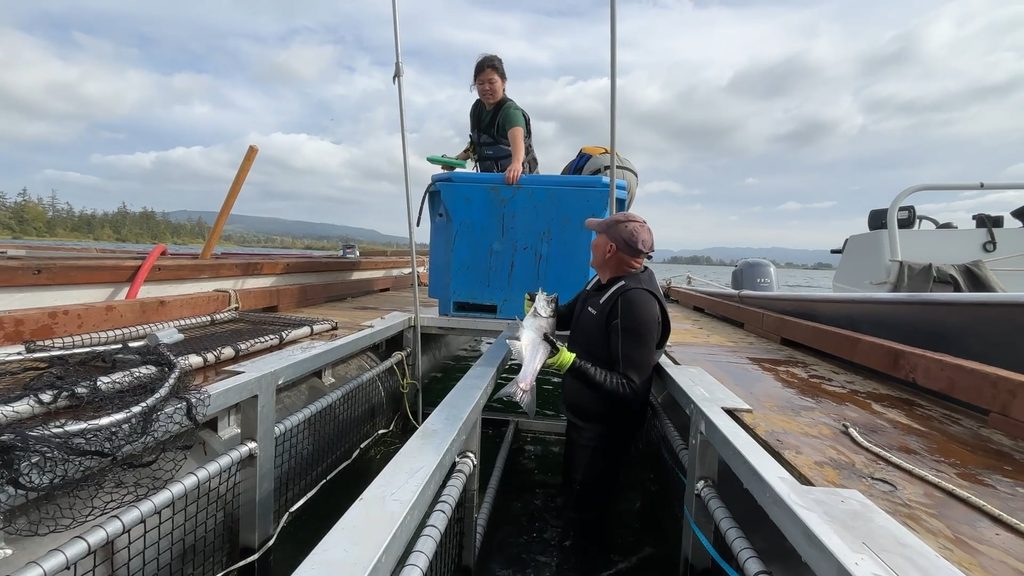
Figure 2: Commercial fisher Mike Clark hands off a harvested coho to a WDFW field technician to put on ice.
Since deployment of this gear type differs greatly from that of a gillnet, our team provides technical support to fishers in hanging the trap’s nets. Similar to historical fish traps, the lead and heart nets are carefully flaked from a small skiff and attached to the untreated pilings approximately four feet above the high-water line using rope and large staples. The pot net is then attached to steel-cable guidewires that allow the net to be winched upward or deployed to the riverbed with heavy weights. After a decade of experience executing this work, our team has developed a strategy across the tides that allows a crew of three to attach all trap nets to the pilings above the high-water line in a single day.
When the time is right to begin fishing, our team next provides technical assistance with net deployment. First, lines corresponding to each piling are attached to the bottom of the hanging net, and a scuba diver or free diver draws them through a fixed ring at the base of the piling. At the appropriate slack tide, these lines are then pulled by the crew to draw the net downward to the riverbed. As with fish traps that historically operated in the Columbia River, the modern trap’s nets are then checked by a diver to ensure successful deployment to the riverbed. At low tide, our team scuba dives to identify potential issues and make corrections, as needed, to minimize any gaps underneath the nets and around the pilings where fish could escape capture and live sorting. Once again, our experienced team has developed a strategy across the tides to properly deploy all nets and check for successful deployment within a single day, utilizing a crew of three.
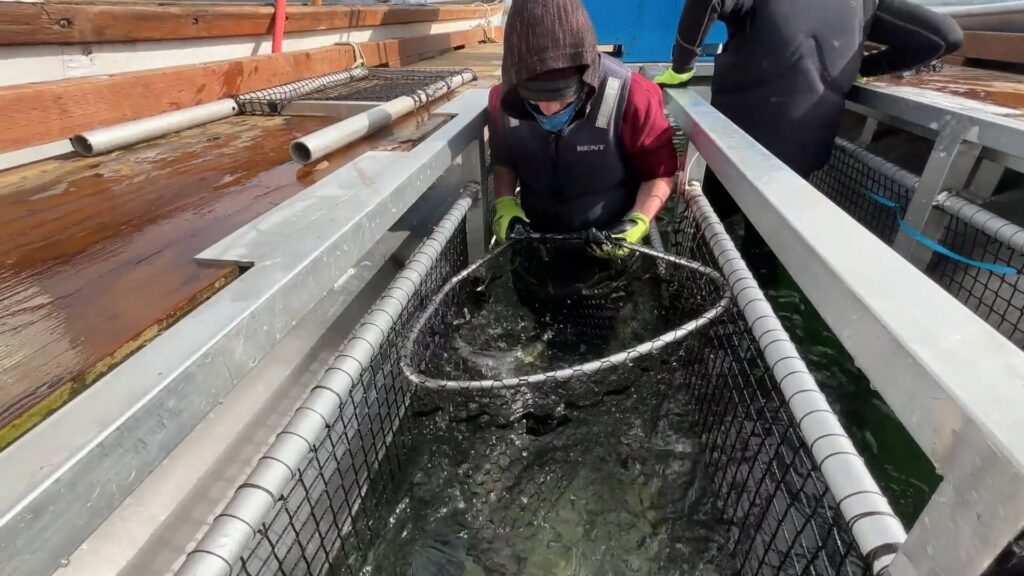
Figure 3: A commercial fisherman sorting the catch in the livewell.
Once the traps are fully deployed and operational, WFC remains available to help fishers troubleshoot maintenance issues. Just as any gillnet captain must maintain their boat to stay active in a fishery, fish traps similarly require a captain to carefully observe the trap’s nets and lines each day, checking for debris buildup and other maintenance issues that can develop over time. This year, our team has helped fishers identify and correct these maintenance issues , such as a broken line at the base of a piling. While many of these problems can go unnoticed by those unfamiliar with the gear, our highly specialized technical team is attuned to everything that can unfold at a fish trap, no matter how big or small.
In addition to providing maintenance support, our team was also on hand to help as the traps began fishing earlier this season. This work has offered our staff a window into this year’s trap performance—and we have been thrilled to see the preliminary results. Across the trap sites, fishers have harvested thousands of hatchery salmon to date, all while protecting wild salmon and steelhead that would otherwise face mortality in a gillnet fishery. Ultimately, this helps more wild fish return upriver for recovery and reduces the quantity of hatchery salmon on the spawning grounds—protecting the genetic integrity of wild populations.
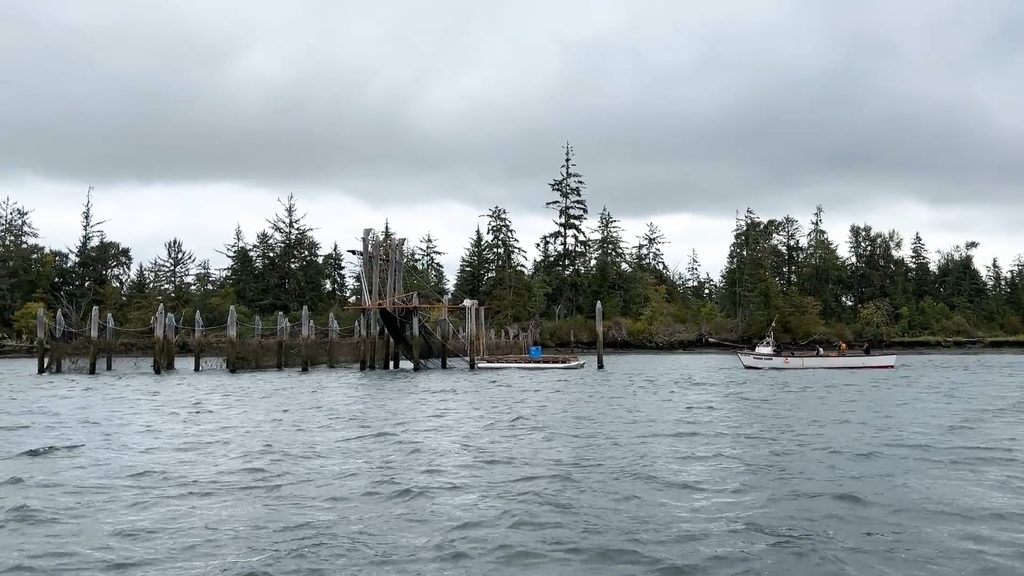
Figure 4: Commercial fishers pulling up to the Hunting Islands fish trap in Cathlament, Washington.
Looking ahead, WFC plans to continue supporting progressive fishers pursuing sustainable, selective fishing practices on the Columbia and elsewhere across the coast. Selective fisheries—like the Columbia River trap fishery—help address two of the primary limiting factors for wild salmon recovery: overharvest and hatcheries. Fishers who embrace such solutions to salmon and orca recovery deserve far more support and incentives from state and federal agencies than they currently receive. WFC’s ongoing work helps fill that gap, ensuring that fishers can overcome barriers to implementing groundbreaking alternative-gear fisheries that stand to benefit the recovery of wild salmon, orcas, and coastal fishing economies.
As the fishing season continues, we look forward to providing further updates on this historic second year of the commercial trap fishery in the lower Columbia River. So far, the traps once again appear successful, and they are the only viable selective-gear technology in demand by local fishers and operating in the 2026 nontribal fishery.
WATCH: Columbia River Fish Trap Fishery | August 2026