
Wild Fish Conservancy is continuing to advance the Stillwater Floodplain Restoration Project along the Snoqualmie River near Carnation, within the Stillwater Unit of the Snoqualmie Wildlife Area. This reach supports some of the highest densities of Chinook salmon spawning in the Snoqualmie Watershed and remains one of the few accessible gravel-bed spawning reaches in the basin.
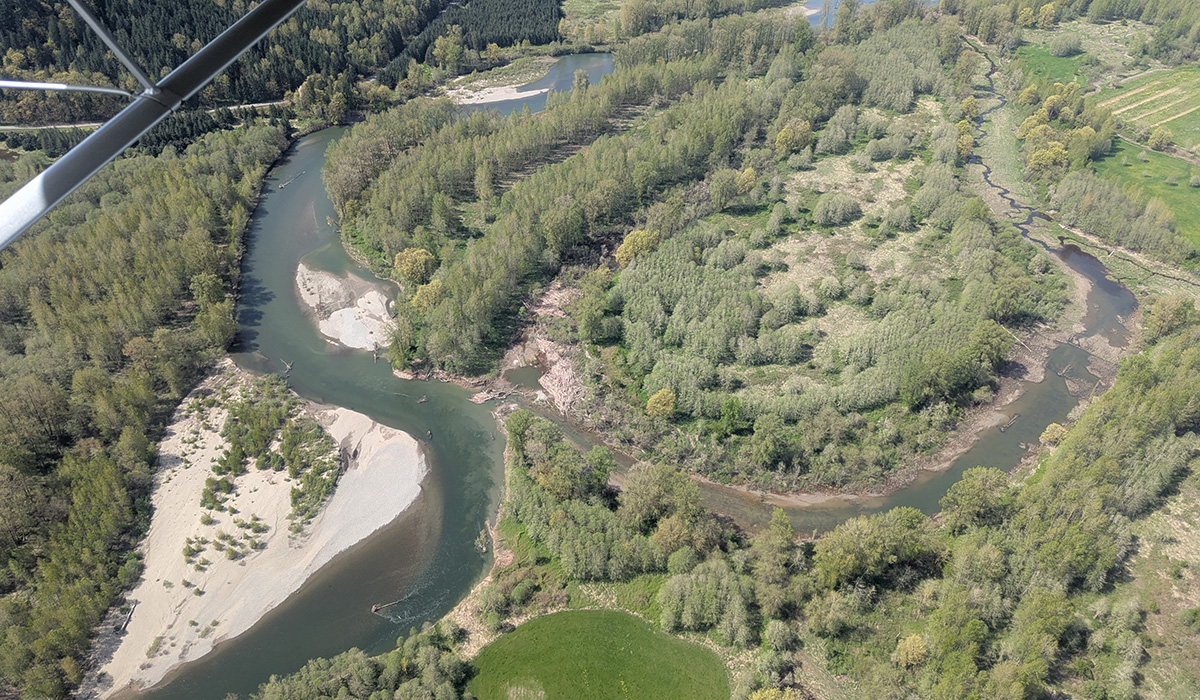
The project builds on a successful restoration effort completed by Wild Fish Conservancy in 2013, when more than 2,100 feet of bank armoring were removed to allow the river to reestablish natural floodplain channel migration processes. Over the following decade, the Snoqualmie River responded dramatically, migrating into the area behind the armoring and reactivating historic floodplain habitats that had been disconnected for generations.
Recent floods accelerated these changes. During the winter of 2025, the river breached into a historic side channel and oxbow complex, creating new opportunities for juvenile salmon rearing habitat while highlighting the dynamic nature of this recovering floodplain.
Wild Fish Conservancy is now working with partners including the Washington Department of Fish and Wildlife, the Snoqualmie Tribe, King County, and our engineering and geotechnical consultants to develop the next phase of restoration actions across more than 240 acres of floodplain habitat. Current efforts include hydraulic modeling, habitat assessments, and the evaluation of large woody debris restoration alternatives that would reconnect floodplain habitats, improve large wood retention, and increase the diversity of off-channel habitat available to salmon throughout the year.
The project is currently in the design phase, with stakeholder workshops and technical evaluations helping shape a preferred restoration alternative. Wild Fish Conservancy expects to identify that preferred alternative in the coming months and continue advancing the project toward preliminary engineering design and permitting.
By restoring the natural processes that create and maintain side channels, wetlands, and floodplain forests, the Stillwater Floodplain Restoration Project aims to create resilient habitat capable of supporting Chinook salmon, steelhead, coho, bull trout, and other native fish species for generations to come.