Fish Trap Journal
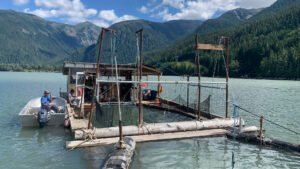
Protected: Selective Fishing Innovations: A Breakthrough Season for the Skeena River Floating Fish Trap Project
There is no excerpt because this is a protected post.

There is no excerpt because this is a protected post.

Decisions about wild fish are made on paper long before anyone sees a result in a river. Biological opinions, status reviews, hatchery genetic management plans, harvest models, and policy drafts are all public record—but almost none of it is written to be read by anyone outside the process. Wild Fish Conservancy reads the record, parses the risk methodology, and explains what it means for wild fish and the ecosystems they depend on.
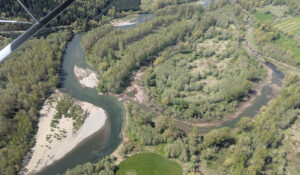
Wild Fish Conservancy is continuing to advance the Stillwater Floodplain Restoration Project along the Snoqualmie River near Carnation, within the Stillwater Unit of the Snoqualmie Wildlife Area.
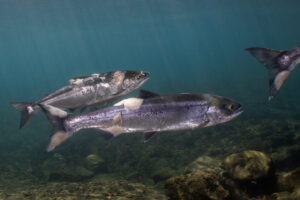
Columbia Basin water temperatures are rising, and sockeye salmon are paying the price. Learn what local conservation groups are doing to protect endangered sockeye from rising temperatures.
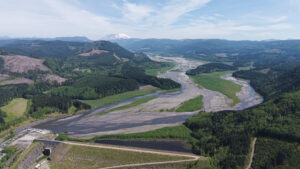
Wild Fish Conservancy and local conservationist Mark Smith have sued the National Marine Fisheries Service and U.S. Army Corps of Engineers to protect wild salmon and steelhead from a project to raise the height of the Mount St. Helens Sediment Retention Structure’s spillway crest on the North Fork Toutle River.
Wild Fish Conservancy welcomes the Bonneville Power Administration’s decision to end funding for the Select Area Fisheries Enhancement (SAFE) hatchery program—which releases more than seven million hatchery Chinook and coho into the lower Columbia River each year—as an overdue shift away from hatchery-dependent harvest and toward the habitat restoration, fish passage, and harvest reform that wild salmon, steelhead, and Southern Resident killer whales need to recover.

A backgrounder on a new study published in the journal Scientific Reports by researchers from the Wild Fish Conservancy and Raincoast Conservation Foundation. This new research identifies fisheries practices that may be contributing to long-term declines in the age and size of Chinook salmon across the northeast Pacific.
In 2025, Wild Fish Conservancy and partners installed 36 beaver dam analogs (BDAs) in three Chehalis River tributaries as part of a rigorous, multi-year project to monitor and document the effectiveness of BDAs for restoring aquatic habitat that supports fish, amphibians, and waterfowl.
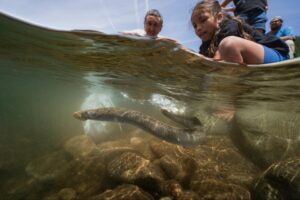
Wild Fish Conservancy partnered with renowned underwater photographer David Herasimtchuk to create a definitive visual portfolio of Pacific Lamprey—one of the Pacific Northwest’s most ancient and imperiled fish. The resulting archive is now available to partners, Tribal organizations, and anyone working on lamprey recovery.
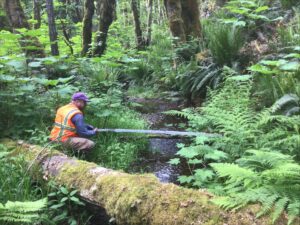
After more than 25 years, Washington state finally has a permanent water typing rule and guidance that went into effect in March 2026, informed in part by years of Wild Fish Conservancy field work and technical expertise.
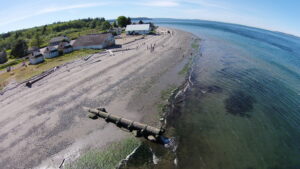
Wild Fish Conservancy has secured a prestigious national grant award to advance a critical fish habitat restoration project in the Finn Creek Watershed on the Kitsap Peninsula in Washington state.

Today, federal government issued its 12-month finding on the petition to list Olympic Peninsula steelhead under the Endangered Species Act. NOAA determined that Olympic Peninsula steelhead qualify as a distinct population segment under the ESA and acknowledged long-term population declines, reduced productivity, and substantial uncertainty, but concluded that listing is not warranted at this time.
Contacts: Emma Helverson, Wild Fish Conservancy, 484- 788-1174, emma@wildfishconservancy.orgJohn McMillan, The Conservation Angler, 360-797-3215, john.mcmillan@theconservationangler.orgBrian Knutsen, Kampmeier & Knutsen PLLC, 503-841-6515, brian@kampmeierknutsen.com For Immediate Release
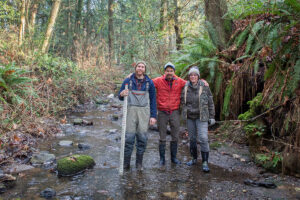
When strong partnerships and sound science come together, the path to healthier watersheds becomes possible.
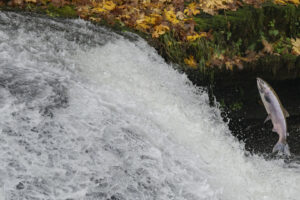
Read Wild Fish Conservancy’s recent comments on the management of Oregon Coast coho salmon.
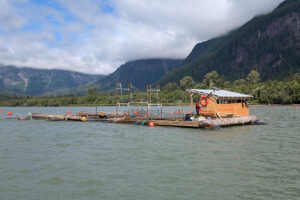
There is no excerpt because this is a protected post.

After conducting snorkel surveys for more than 25 years, Wild Fish Conservancy has learned a lot about steelhead populations’ status, trends, and the number of hatchery fish that stray into wild rivers.

Earlier this year, Wild Fish Conservancy proudly announced the implementation of Washington’s State’s second commercial fish trap since 1934. The new trap located near Hunting Islands is part of the state’s historic Emerging Commercial Fishery—the first of its kind in nearly a century.
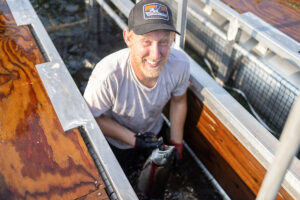
History continues to be made on the lower Columbia River this month with the first commercial fish traps since 1934 now operating at three sites in Washington and Oregon.
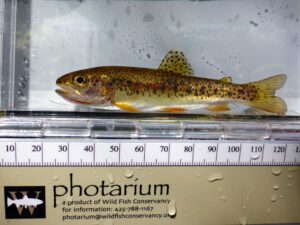
Here’s how Wild Fish Conservancy is working to ensure the Washington Fish & Wildlife Department’s Resident Native Trout Harvest Management Policy doesn’t harm imperiled native resident trout.
Anyone who spends time on our rivers understands the profound story they tell—a story of return, resilience, and relationships as old as the mountains. But

Nearly a century ago, fish traps were banned in Washington State due to poor management that led to overharvest and the decline of wild salmon populations. Now, in a historic moment, fish traps will return to the Columbia River for the first time since 1934—this time as a tool to advance the protection and recovery of the basin’s threatened wild salmon and steelhead.