
History continues to be made on the lower Columbia River this month with the first commercial fish traps since 1934 now operating at three sites in Washington and Oregon.
As a sustainable alternative to conventional gillnets that are known to cause considerable bycatch mortality, contemporary fish traps provide a new means for local commercial fishers to safely sort their catch, selectively harvest hatchery fish, and release all wild salmon and steelhead bycatch for population recovery.

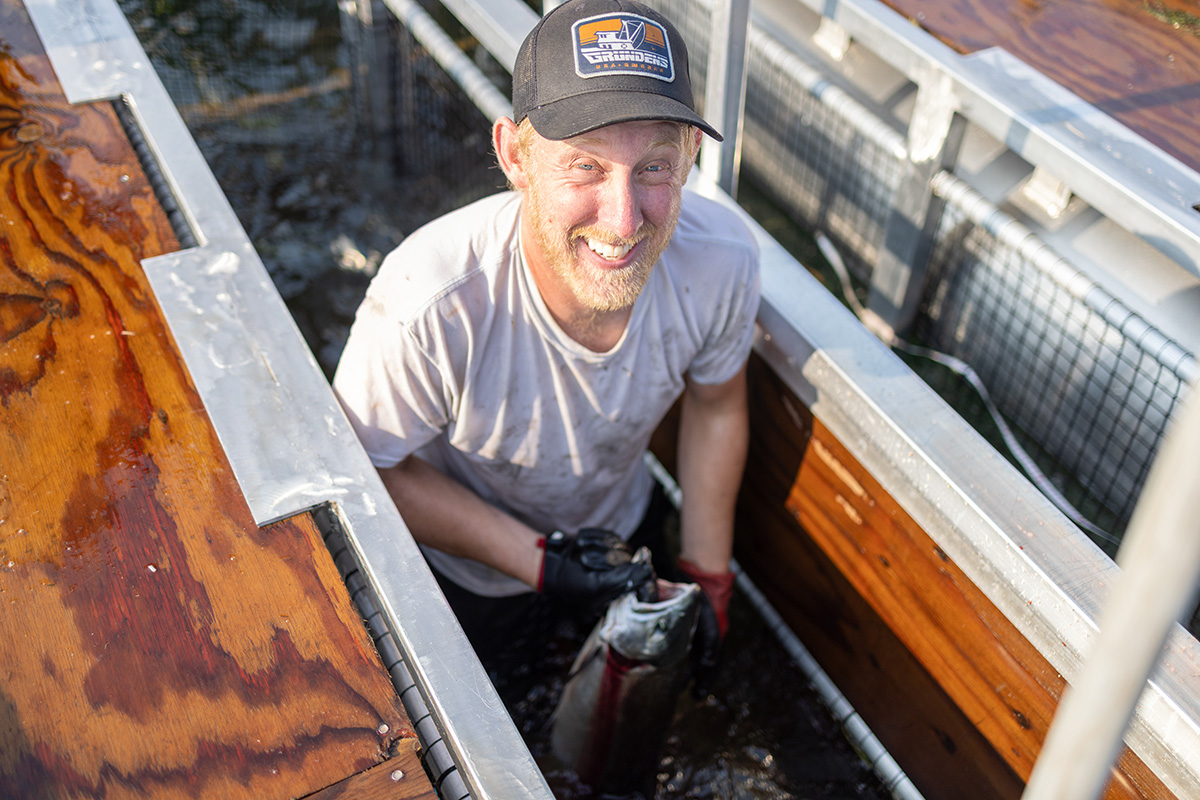
Figure 1: WFC staff member Devin Rose displays freshly harvested hatchery coho and Chinook alongside a WDFW observer.
Since late August, progressive fishers have been operating three fish traps located in Cathlamet Channel and Clifton Channel on the lower Columbia River in Washington and Oregon, protecting wild salmon and steelhead while advancing a sustainable path forward for local fishing communities.
Unlike the conventional gillnet fishery, the fishers operating these fish traps protect and release the hundreds of wild salmon and steelhead encountered in the lower Columbia River fishery each day, harvesting only the abundant hatchery fish that may otherwise stray to wild salmon spawning grounds and harm the genetic integrity of wild salmon populations. Although catch rates between the traps vary—with the Washington sites outperforming the Oregon location—the fishery has been a major success, allowing the fishers to harvest and generate revenue sustainably while providing a service to the environment and the public’s massive investment in wild salmon recovery.
The traps are being operated and monitored under the Washington Department of Fish and Wildlife’s (WDFW) newly designated Emerging Commercial Fishery—a five-year experimental fishery that stands to determine the long-term fate of alternative fishing gear. Oddly, WDFW is evaluating the viability of the fishery not on the benefits it provides to wild salmon and steelhead recovery but solely on its economic performance within a highly constrained setting.

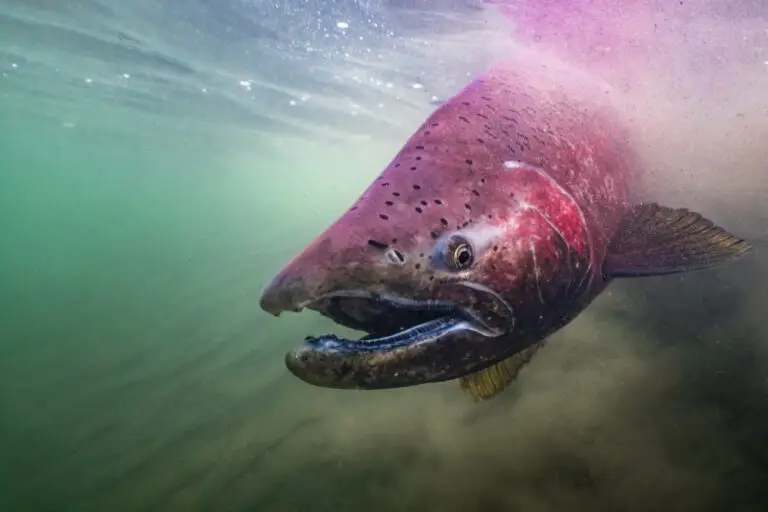
Figure 2: Hatchery Chinook sorted by WFC staff for harvest.
With years of experience developing and researching contemporary fish traps, WFC’s hardworking staff are on the river each day providing critical hands-on technical assistance and training to the commercial fishing crews during this historic first year of fishing on the lower Columbia River. Our primary goal is to ensure both biological and economic success for the fishery. Given the short evaluation window granted to the fishery, it is critical to achieve successful outcomes during each week of operation—not only for the fishery’s future, but to show the world that viable alternatives to conventional salmon fisheries exist and that a truly sustainable path forward for commercial fishing and wild fish recovery is possible at a coastwide-scale.
Challenging the status-quo and testing alternative technologies for the first time in 90 years is no small task. Fishing crews must be properly trained and supported to learn a brand-new technology that differs dramatically from traditional gillnets. Despite the challenge, our staff and commercial fishing partners have risen to the occasion, bringing hundreds of hatchery salmon to market while protecting all wild salmon and steelhead encountered in the fishery.
As progress continues with the historic Columbia River fishery, we’ll be sharing further updates from the river. Stay tuned through the Fish Trap Journal.

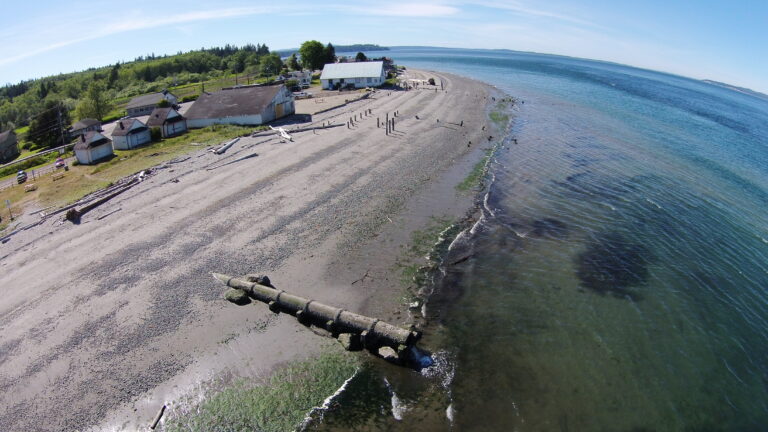
Figure 3: Overhead view of the Clifton Channel fish trap.
Invest in the Future of Sustainable Fisheries
Since 2016, our members and supporters like you have made this work possible. To keep this historic fishery moving forward, build on the momentum that brought us here, and ensure this critical work continues, we’ve launched a campaign to raise $25,000 by the end of September.
Your gift today will:
Your support today is more than a donation—it’s an investment in the future of sustainable fisheries.
Wild Fish Conservancy is recognized as a 501(c)3 non-profit by the IRS and all donations are tax-deductible (Tax ID: 91-1451405).