
Contacts:
Emma Helverson, Wild Fish Conservancy, emma@wildfishconservancy.org, 484-788-1174
Conrad Gowell, Wild Fish Conservancy, conrad@wildfishconservancy.org
For Immediate Release
July 2, 2026
PDF Version
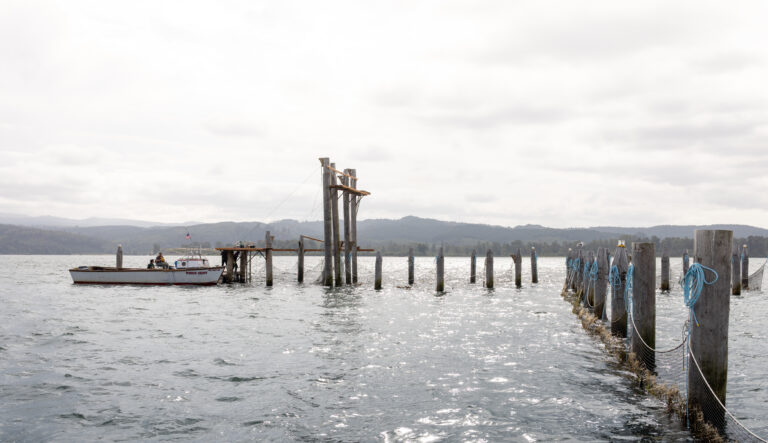
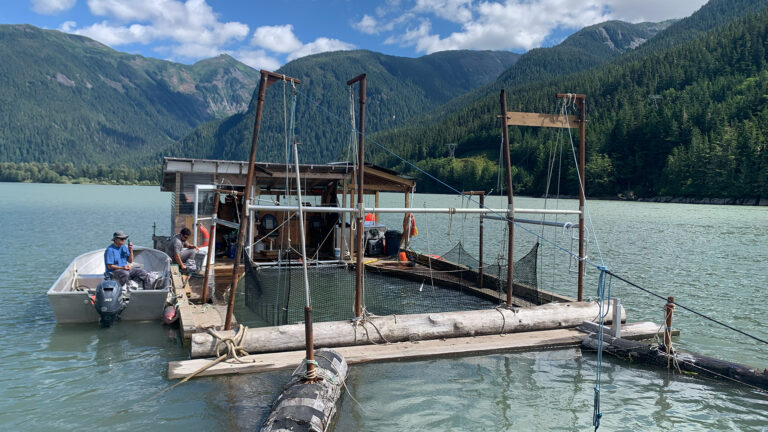
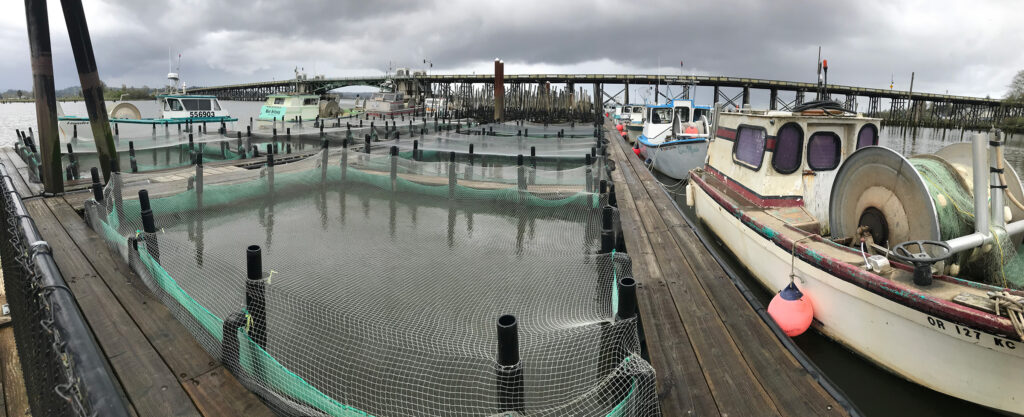
PORTLAND, Oregon—The Bonneville Power Administration is ending its funding of the Select Area Fisheries Enhancement (SAFE) hatchery program in the lower Columbia River below Bonneville Dam, a program that releases more than seven million hatchery Chinook and coho each year for commercial and recreational harvest. Wild Fish Conservancy welcomes the decision as an overdue step away from a hatchery-dependent harvest model and toward the habitat, fish passage, and harvest reform that wild salmon, steelhead, and the Southern Resident killer whales that depend on them actually need to recover.
In a letter to the Oregon Department of Fish and Wildlife, Bonneville Power Administration stated that the SAFE program has not demonstrated a benefit for weak or Endangered Species Act-listed stocks, that it functions only to augment harvest, and that it does not align with the Northwest Power and Conservation Council‘s priority of rebuilding fish abundance above Bonneville Dam. Bonneville Power Administration—and therefore its ratepayers—has contributed roughly $1.6 million a year to the program. Under the Northwest Power Act, that money is meant to mitigate the harm the Federal Columbia River Power System has done to fish and wildlife, not to subsidize fisheries.
“For too long, scarce mitigation dollars meant to recover wild fish have instead gone toward producing hatchery fish for harvest, while the wild populations those dollars are supposed to rebuild continue to decline,” said Emma Helverson, Executive Director of Wild Fish Conservancy. “This funding can finally go toward the habitat, passage, and recovery that wild salmon and steelhead actually need.”
By the Bonneville Power Administration’s own environmental assessment, SAFE fish are produced purely for harvest, not to contribute to wild populations or their recovery. National Oceanic and Atmospheric Administration (NOAA) Fisheries’ 2025 Biological Opinion for the SAFE programs authorizes them to harm Endangered Species Act-listed Columbia River chum—threatened since 1999 and functionally extirpated across much of its historic range—and other listed salmon and steelhead populations, through genetic and ecological interactions between hatchery and wild fish. Beyond those direct impacts, the program feeds ocean fisheries, where its hatchery fish mingle with Endangered Species Act-listed wild salmon from rivers across the Pacific Coast. Because these mixed-stock fisheries cannot distinguish one population from another, harvest rates set to the abundance of hatchery fish fall on co-migrating wild stocks that cannot sustain that pressure.
“Hatchery fish flooding the ocean create an illusion of abundance that drives harvest pressure onto our most imperiled wild populations—the fish we can least afford to lose,” said Helverson. “Ending SAFE doesn’t solve that on its own; the mixed-stock ocean fisheries intercepting these fish are also central to the problem. But it stops spending scarce recovery dollars to make that problem worse, and that’s the direction recovery requires.”
The program’s origins underscore the point. The select-area system was built over decades to move commercial gillnetting off the mainstem Columbia and into off-channel terminal fisheries—a shift accelerated by Oregon and Washington’s 2012 and 2013 fishery reforms and sustained by expanding hatchery production—on the premise that in-river netting was the principal threat to Endangered Species Act-listed fish. Yet the wild stocks the program is said to protect are also harvested in large numbers in mixed-stock ocean fisheries off Alaska, British Columbia, and the West Coast, a major source of interception that the in-river approach never addressed.
The decision follows a 2024 settlement among Wild Fish Conservancy, The Conservation Angler, and the Washington Department of Fish and Wildlife that ended the Deep River net pens, another lower-Columbia hatchery operation.
Wild Fish Conservancy urges the Bonneville Power Administration, the Council, and the states to redirect the resources that funded SAFE into habitat restoration, fish passage and the in-basin work within their authority that genuinely rebuilds wild fish. And because the least-addressed threat to these wild stocks is their interception in mixed-stock ocean fisheries, Wild Fish Conservancy calls on NOAA Fisheries and the United States to confront that harvest directly, including through the 2028 renegotiation of the Pacific Salmon Treaty.
Wild Fish Conservancy also continues to challenge NOAA Fisheries in federal court. A complaint filed in November 2025 in the U.S. District Court for the District of Oregon alleges that NOAA Fisheries’ 2025 SAFE Biological Opinion fails to comply with the Endangered Species Act and unlawfully authorizes the SAFE programs to harm threatened wild salmon, steelhead, and the orcas that depend on them.
###
Wild Fish Conservancy is a nonprofit conservation organization headquartered in Washington State and working from California to Alaska to preserve, protect and restore the northwest’s wild fish and the ecosystems they depend on, through science, education, and advocacy. wildfishconservancy.org