
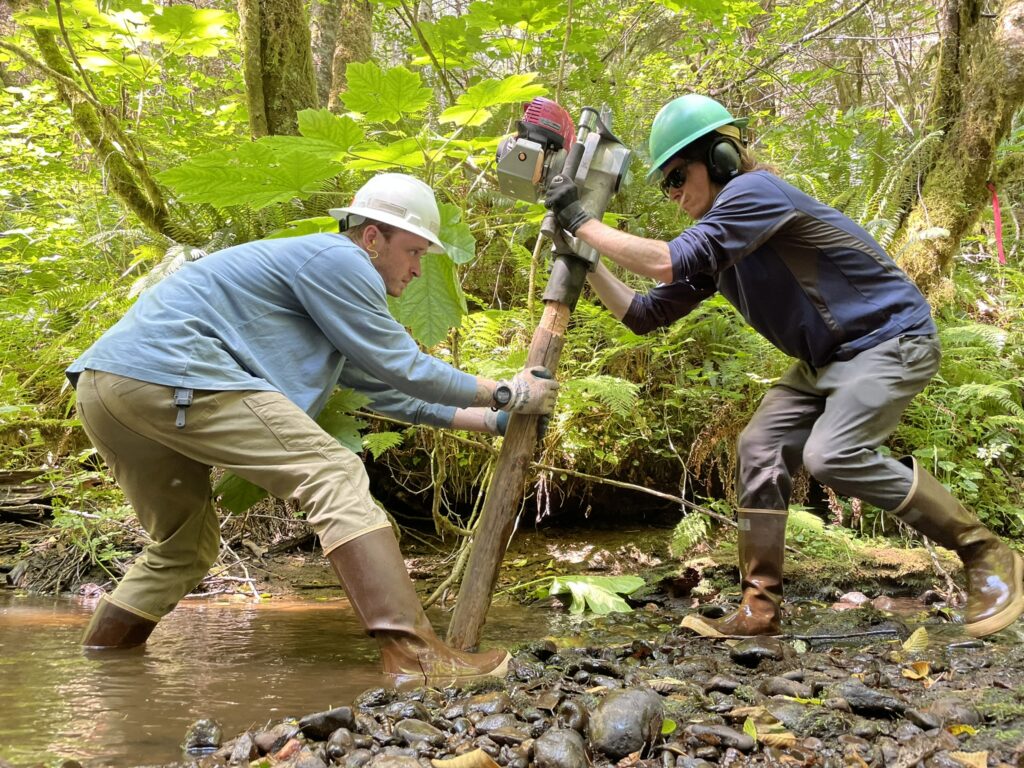
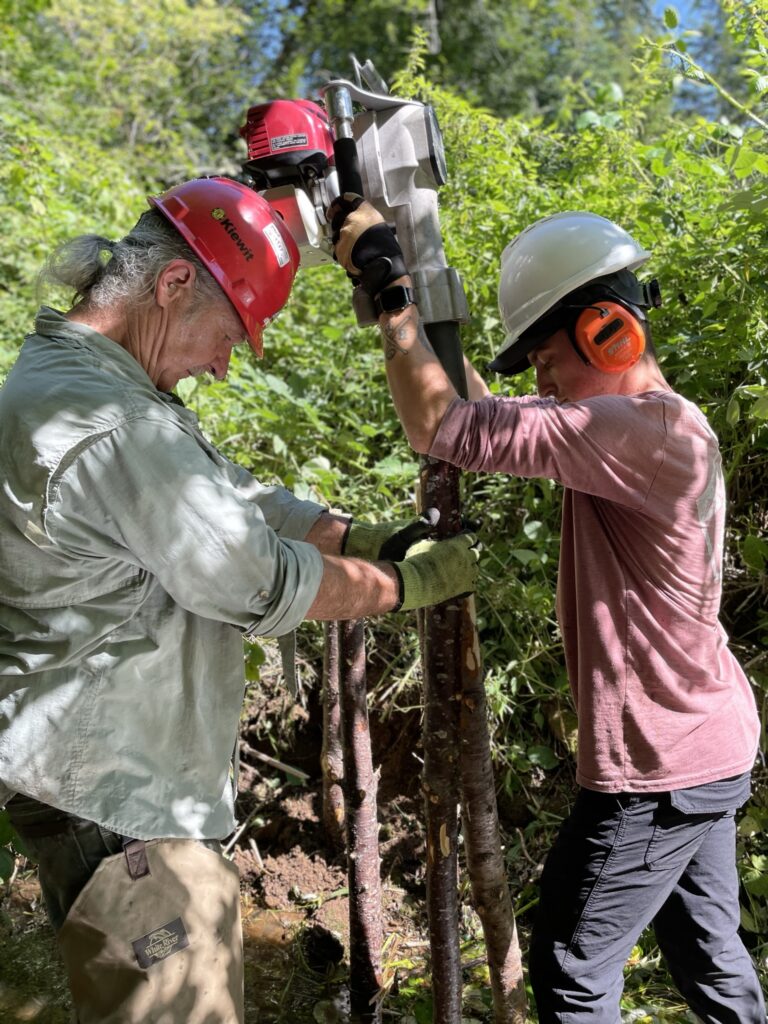
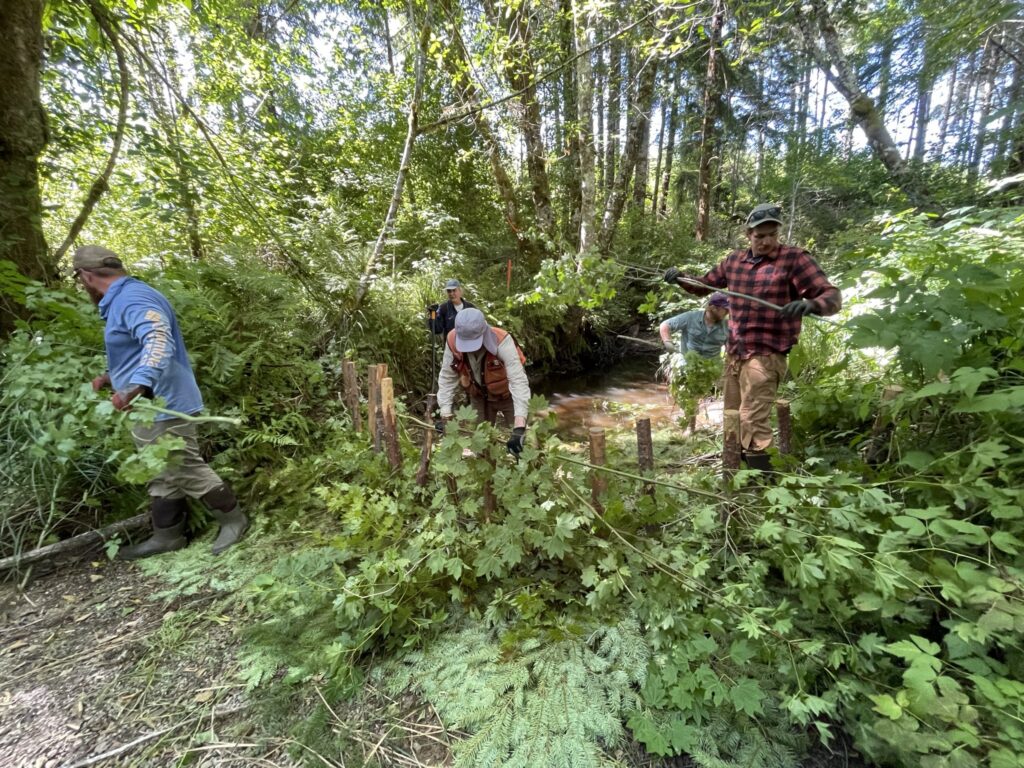
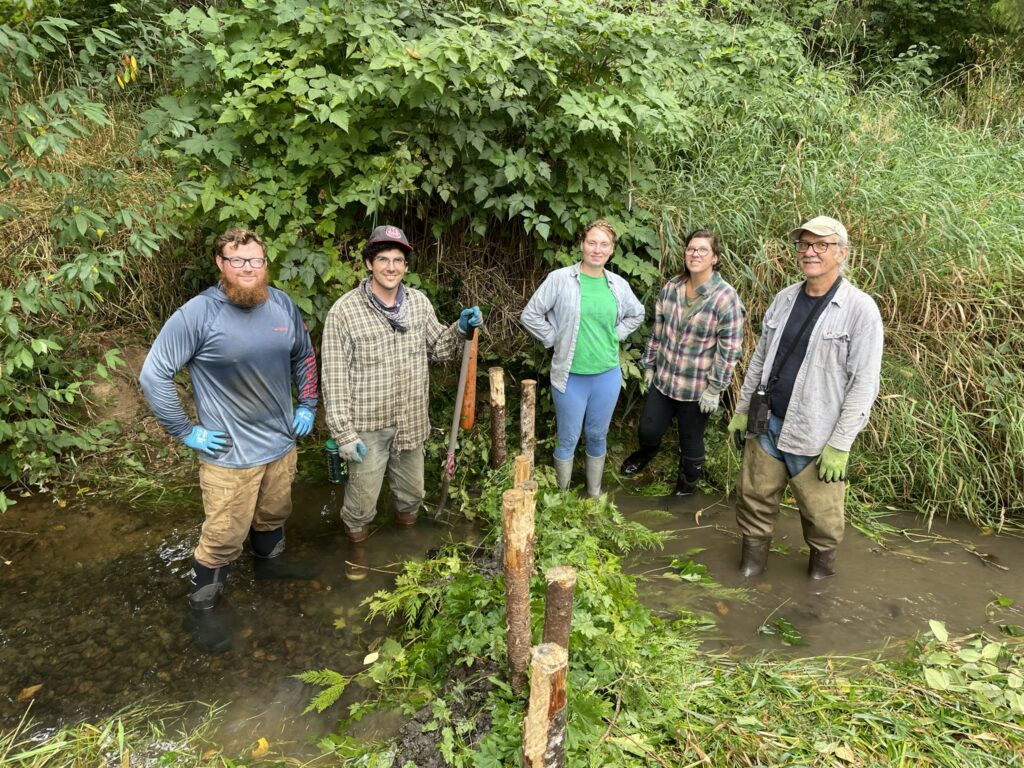
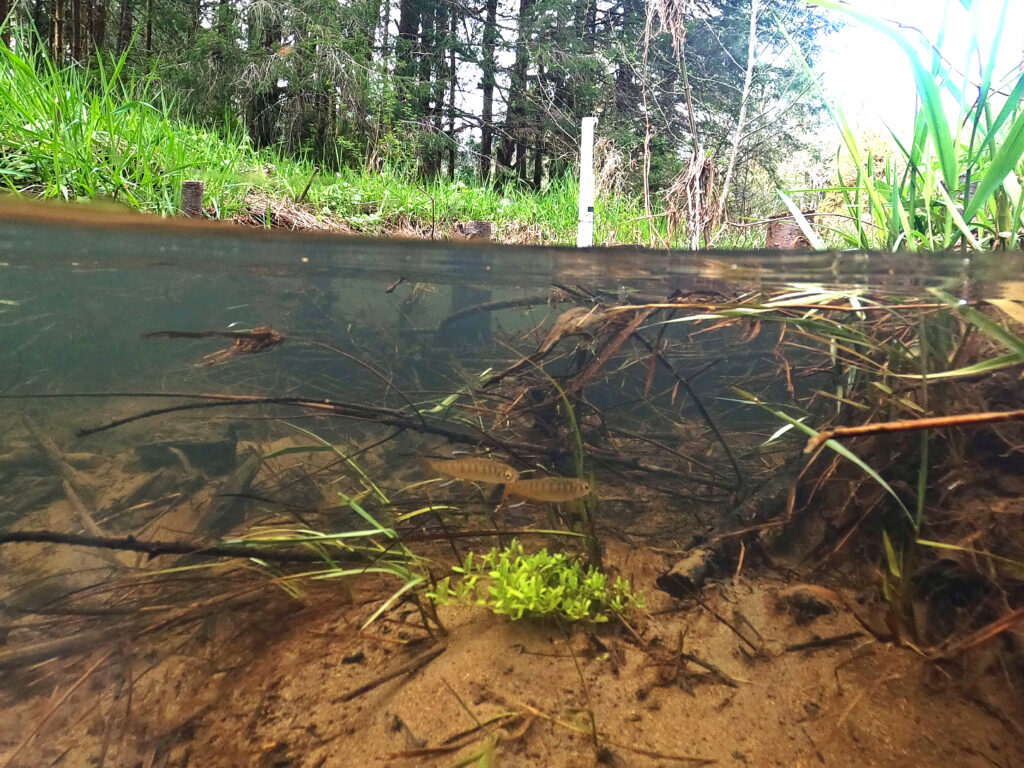
In summer 2025, Wild Fish Conservancy and partners at the Washington Department of Fish and Wildlife and Thurston County Conservation District channeled their inner beavers to build 36 beaver dam analogs (BDAs) in three small streams that feed into the Chehalis River. Constructed of wood posts and branches, using a gas-powered post driver, BDAs are a habitat restoration technique designed to function like natural beaver dams by slowing streamflow and creating ponds and pools that provide fish, amphibian, and waterfowl habitat. They can also store water and contribute to streamflow during the summer, which is increasingly important as climate change makes our summers hotter and drier. Ideally, once the BDAs are installed, real beavers eventually take over the maintenance of the structures, further enhancing them. But how long does that take? And what ecosystem functions do the BDAs provide in the interim? Those are exactly the questions we set out to answer.
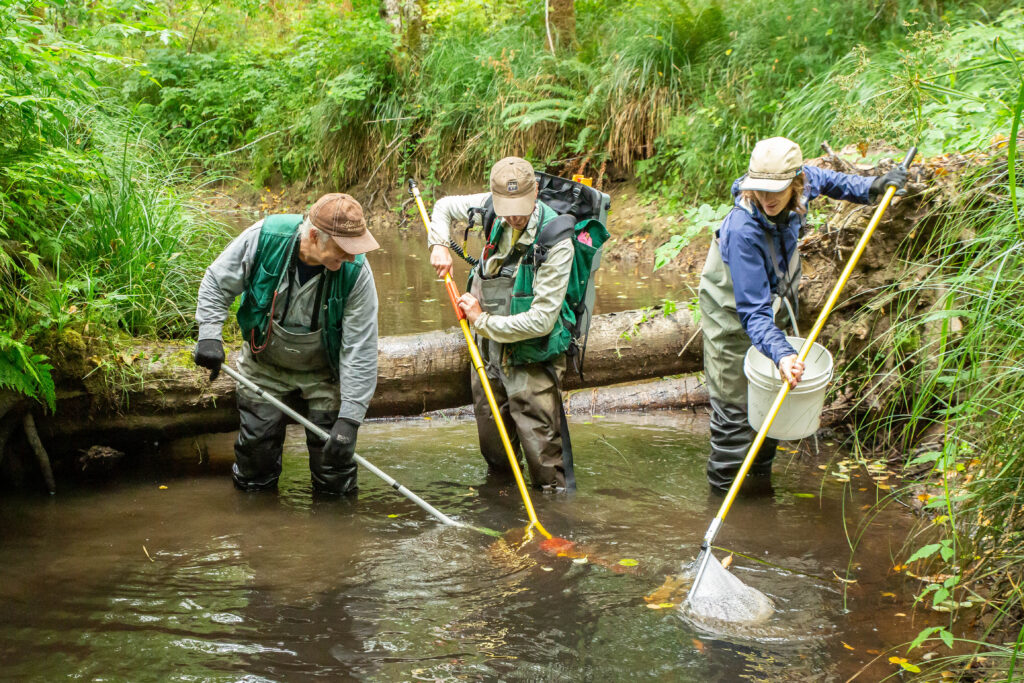
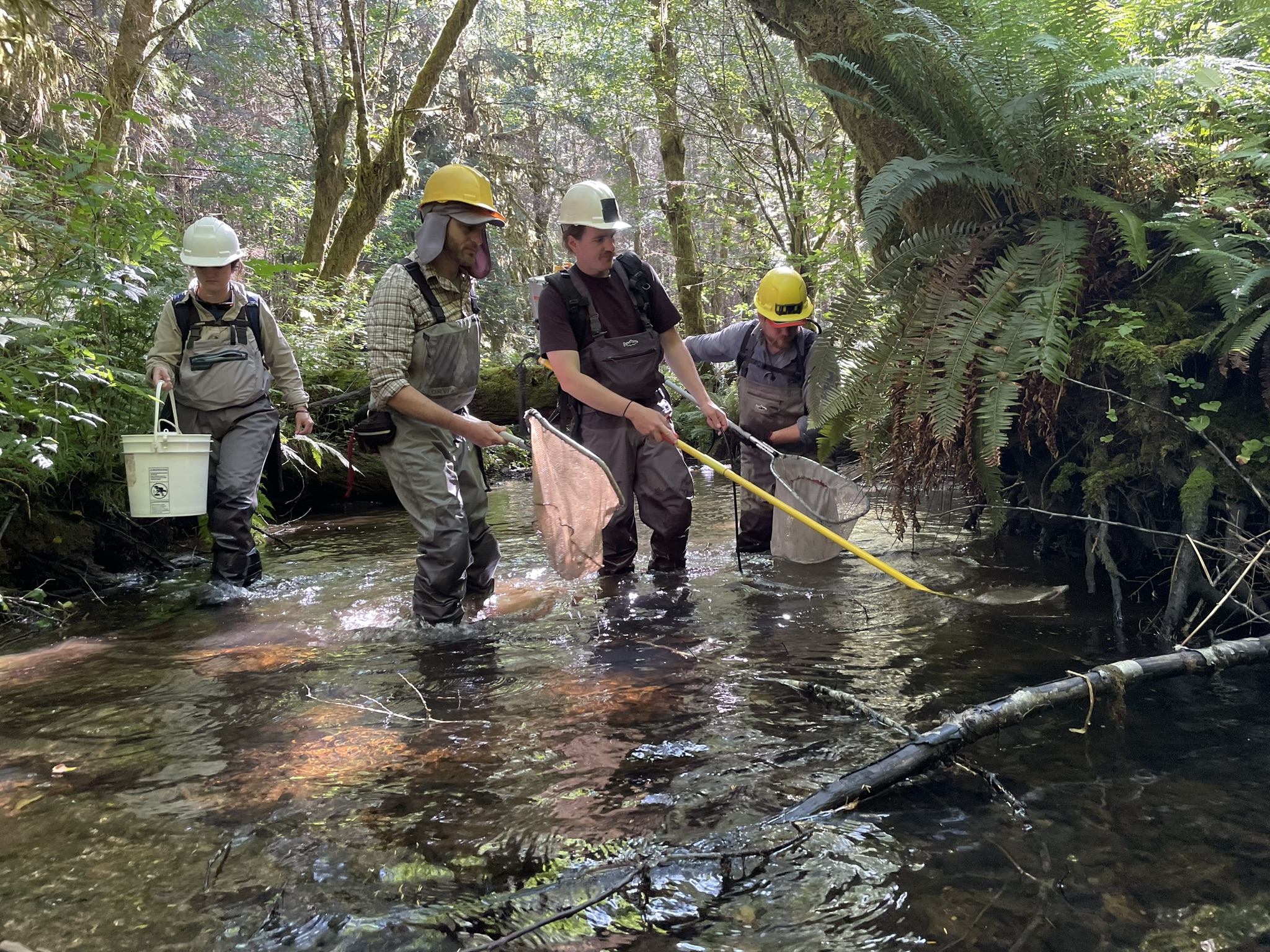
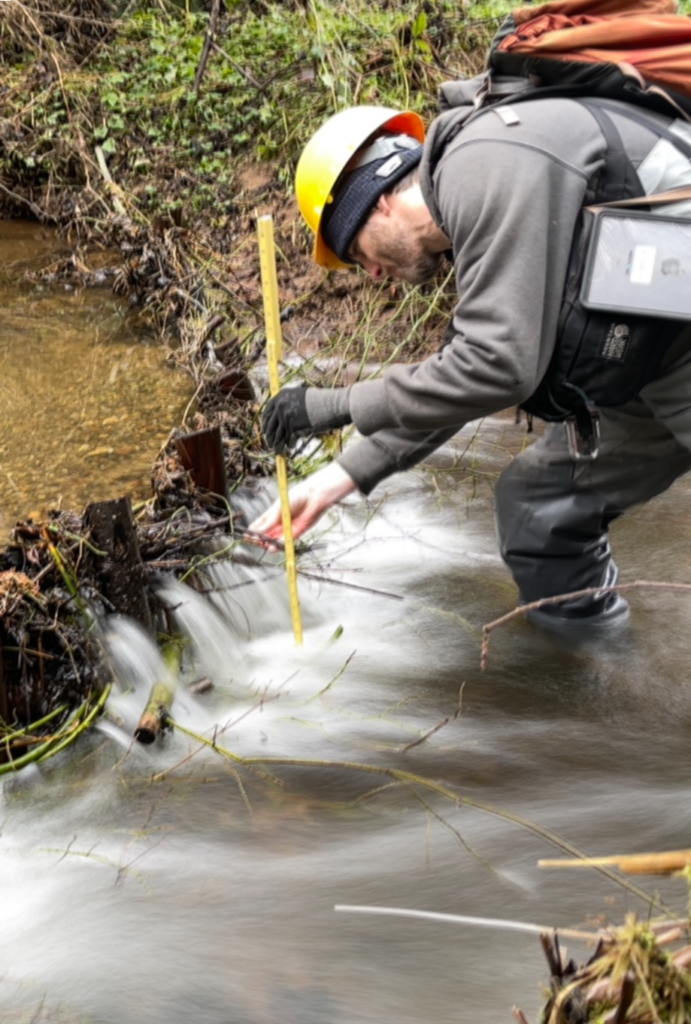
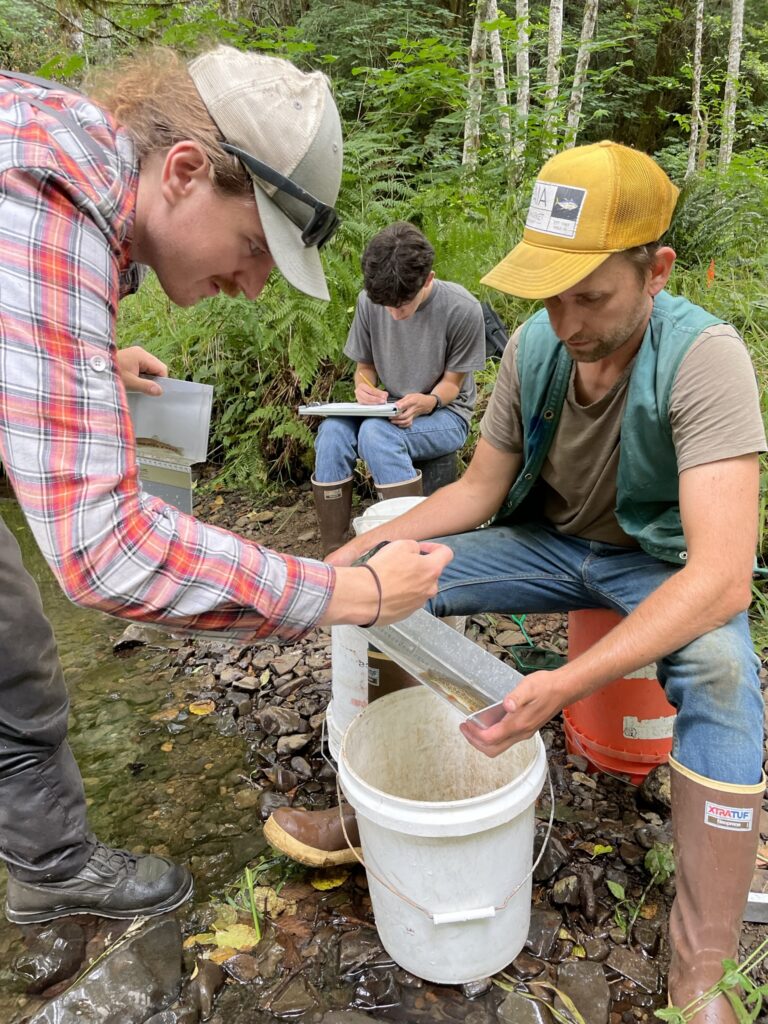
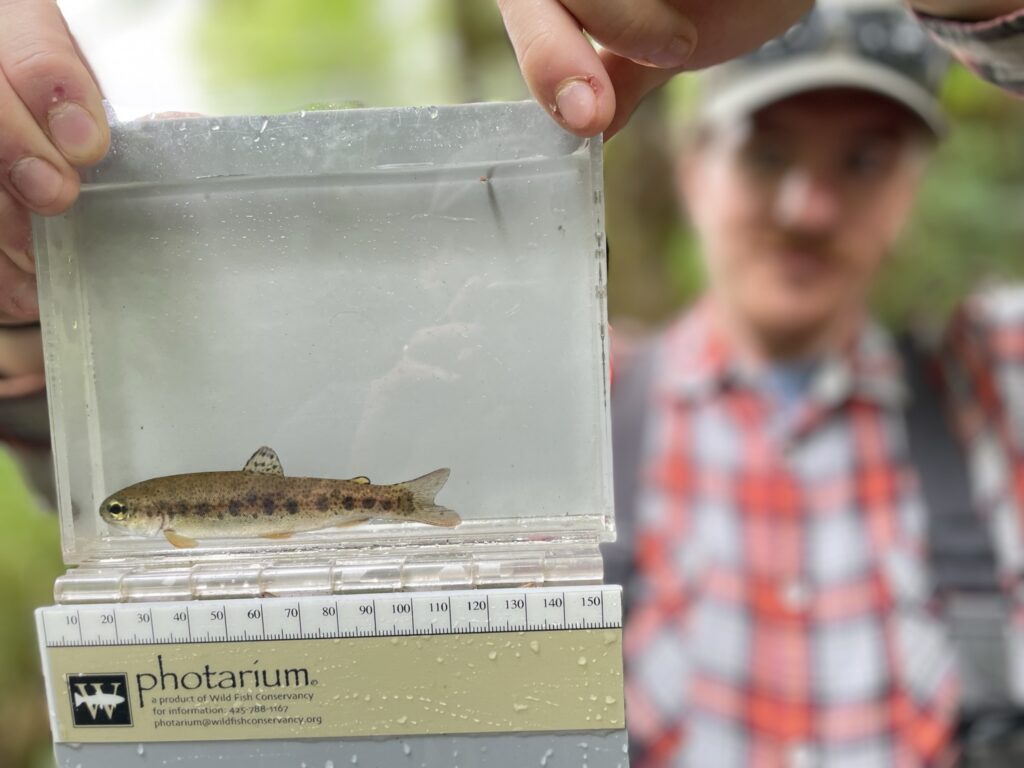
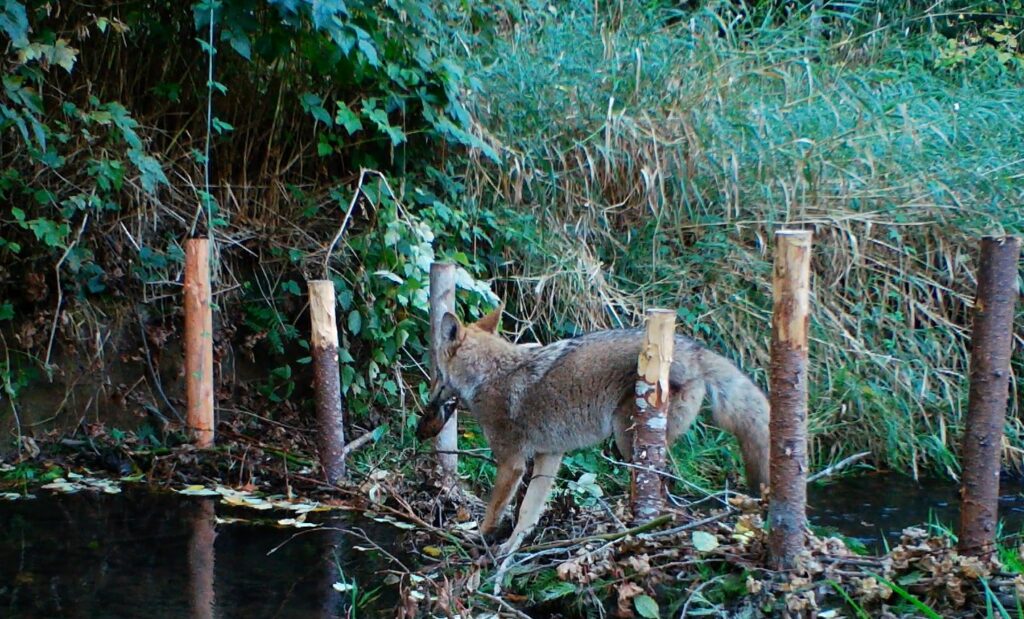
In 2024, one year before BDA construction, Wild Fish Conservancy began monitoring the project sites to establish baseline conditions prior to construction—documenting the distribution of pools, riffles, and glides; the elevation of the streambed; the type and relative density of fish; the size and weight of the fish; the stomach contents of sampled fish; and the distribution of spawning adult salmon. Our Washington Department of Fish and Wildlife partners studied the water temperatures, surface and groundwater elevations, and the aquatic invertebrate and amphibian community structure. They also installed 10 motion-triggered camera traps to document wildlife activity across each site.
Wild Fish Conservancy collected the same data in 2025 prior to construction and will collect it again in 2026 to evaluate how conditions have changed with the addition of the BDAs. Ideally, the sites will be revisited multiple times over the next decade to track how the project reaches evolve over time.
It’s through this science-based approach to restoration monitoring that we can best document how well habitat restoration techniques work—and if they fall short of expectations, we can use those findings to troubleshoot what went wrong. Intensive effectiveness monitoring like this is rarely funded as part of a typical restoration project. We’re grateful to the Washington Department of Ecology and the Chehalis Aquatic Species Restoration Program for recognizing this important opportunity and providing the financial and technical support to make it possible.
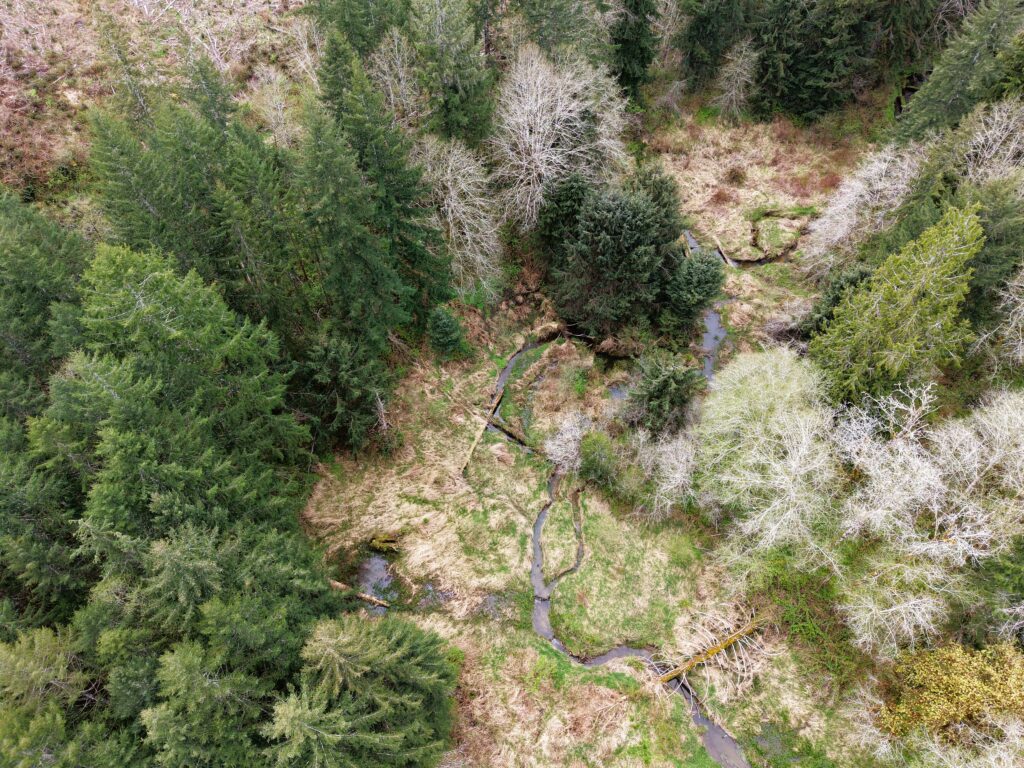
View the photo gallery below to see the project in action.
Curious about our BDA work elsewhere in the region? Explore our interactive StoryMap highlighting our recent project in the Snoqualmie River Watershed.