
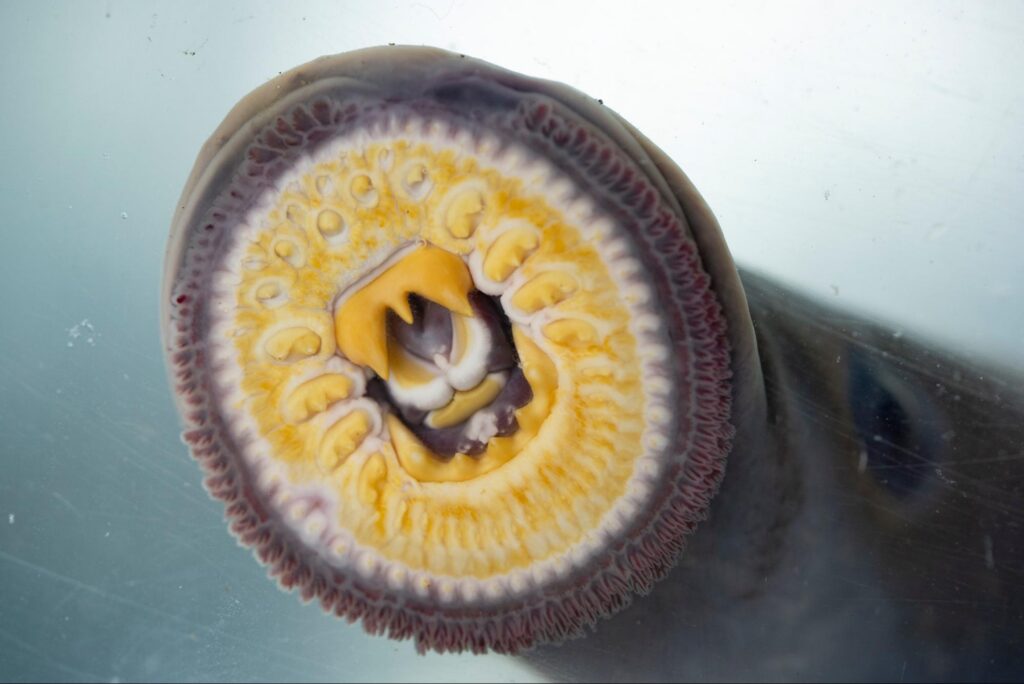
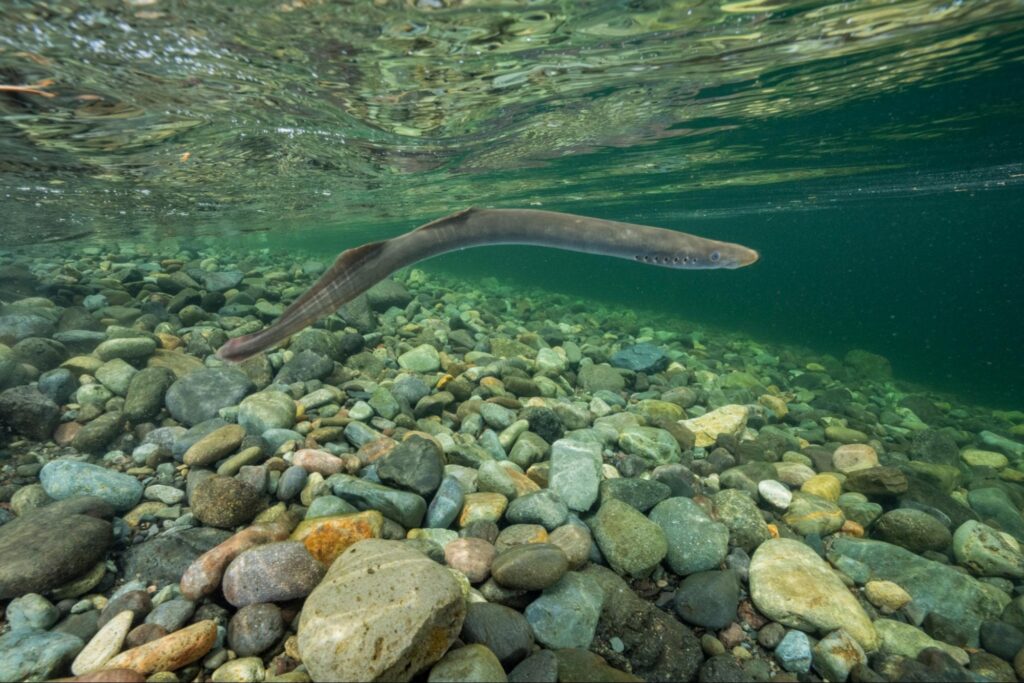
Look closely at the face of a Pacific Lamprey—the ring of teeth, the row of gill pores, those pale and primordial eyes—and you are looking at a design that has not fundamentally changed in 450 million years. This ancient fish survived the asteroid that ended the dinosaurs. It outlasted ice ages and the slow drift of continents. It predates bones, the Rocky Mountains, and nearly everything we recognize about the modern world.
And yet, in the rivers of the Pacific Northwest, it is vanishing.
For the Indigenous peoples of the Columbia River Basin—the Confederated Tribes of the Umatilla Indian Reservation, the Nez Perce Tribe, the Yakama Nation, and others—Pacific Lamprey is not simply a fish; it is a relative. They have been a source of food, medicine, and spiritual connection since time immemorial. When lamprey populations collapse, the loss is not only an ecological loss—it is a severing of something older and deeper than most of us can fully comprehend.
This is the story we set out to tell—through the lens of a camera.
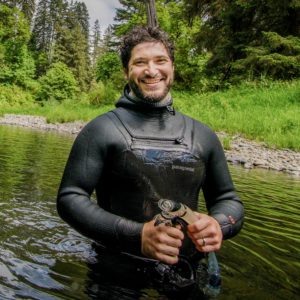
Over the past year, Wild Fish Conservancy, in partnership with renowned underwater photographer David Herasimtchuk, completed an intensive photography project funded by the Pacific Lamprey Conservation Initiative and Bonneville Power Administration. The goal was straightforward but ambitious: create a definitive visual portfolio of Pacific Lamprey—their biology, habitats, the threats they face, and the remarkable community of scientists, tribal members, and conservationists working to bring them back.
The result is a body of work that spans spawning rivers and concrete irrigation canals, tribal fish facilities and dam fish ladders, quiet gravel beds and the roaring curtain of Willamette Falls. It is a visual record of a species at a crossroads—and of the people who refuse to let lamprey disappear.
These images are now available to Pacific Lamprey Conservation Initiative partners, tribal organizations, government agencies, and anyone working on lamprey recovery. The full portfolio can be accessed through the online photographic archive and is available to use under a Creative Commons Attribution-NonCommercial-ShareAlike 4.0 International license—meaning anyone can share and adapt the images for non-commercial purposes, as long as they credit the creators and license their own work under the same terms.
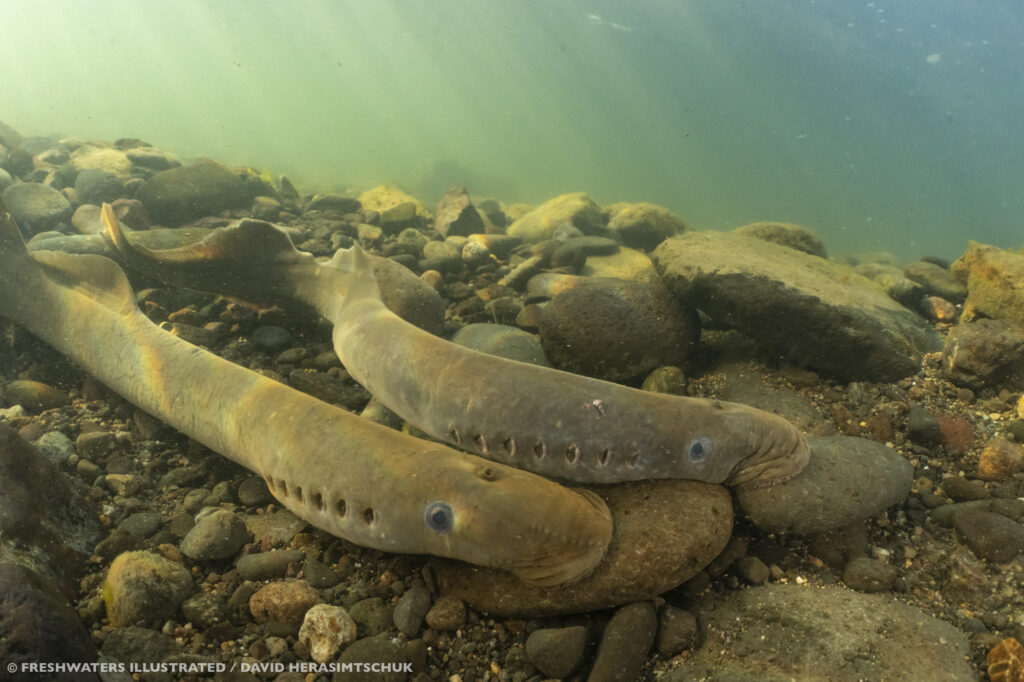
Every spring, adult Pacific Lamprey complete one of the most remarkable migrations in the animal kingdom. After years spent feeding in the open ocean, they return to cold, clear streams to spawn—and to die, their decomposing bodies releasing marine-derived nutrients into river systems that depend on them. Their carcasses feed insects, birds, bears, and the next generation of fish. In this way, lamprey are not just travelers through the watershed. They are architects of it.
The tribal communities of the Columbia Basin have always understood this relationship. Lamprey harvests have sustained people for thousands of years, and that reciprocal bond—the fish nourishing the people, the people protecting the fish—is the foundation of Indigenous stewardship along these rivers. Our images of spawning adults in the North Santiam were made possible through partnerships with tribal fish programs, and they carry that weight.
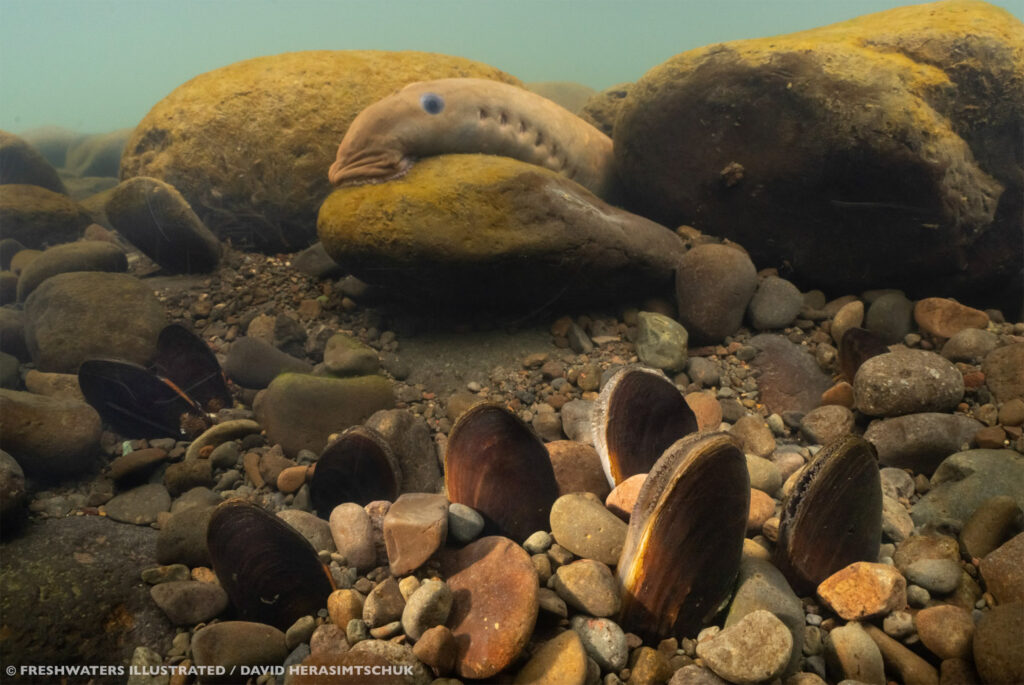
Before lamprey can spawn, they must survive their larval years. Known as ammocoetes, juvenile lamprey spend three to seven years buried in the soft sediment of river banks, filter-feeding on microorganisms. They are small, slow, and almost entirely invisible to the public. They are also extremely vulnerable.
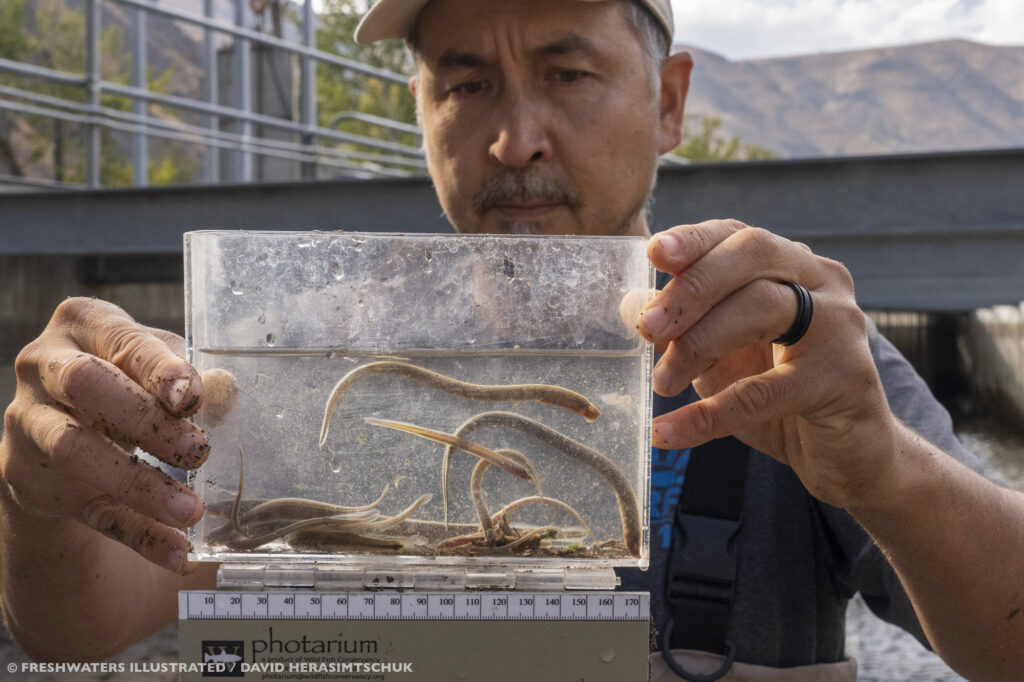
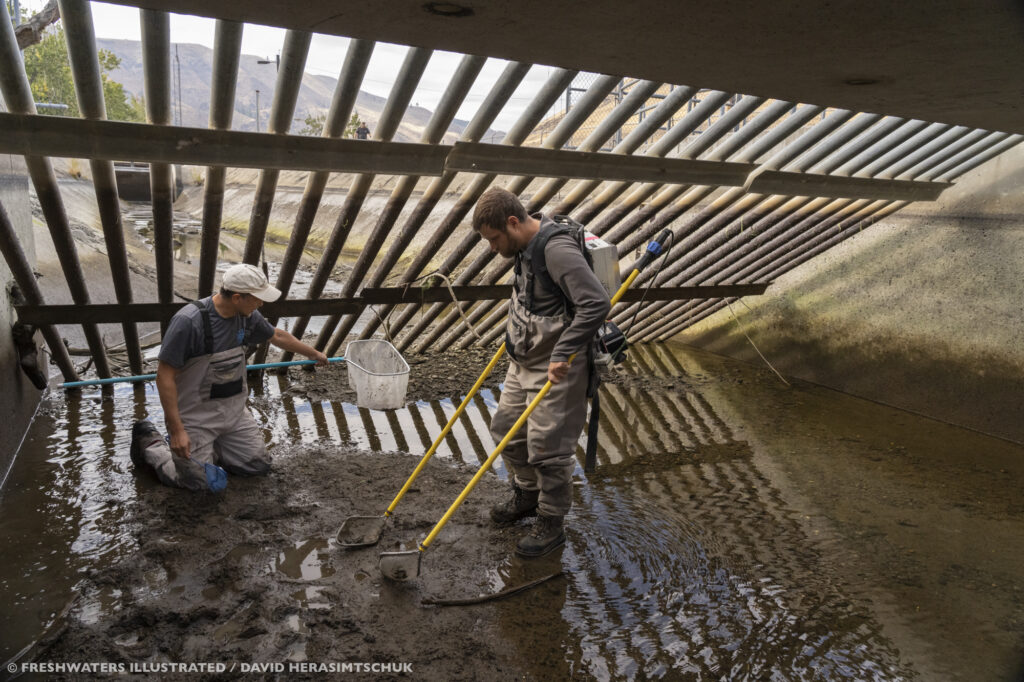
Each irrigation season, thousands of ammocoetes are swept into agricultural canals and left stranded as water levels drop. What the camera documented was the painstaking human response: researchers on their hands and knees in the mud of dewatered channels, carefully sifting ammocoetes from sediment and returning them to the river. At the Yakima River canal salvage, crew members recovered hundreds of individuals in a single day—each one a future adult, a potential spawner, a link in the chain.
This work is unglamorous and largely unseen. The imagery shows the public to what extreme measures we are going to ensure the next generation of lamprey are able to reach the ocean.
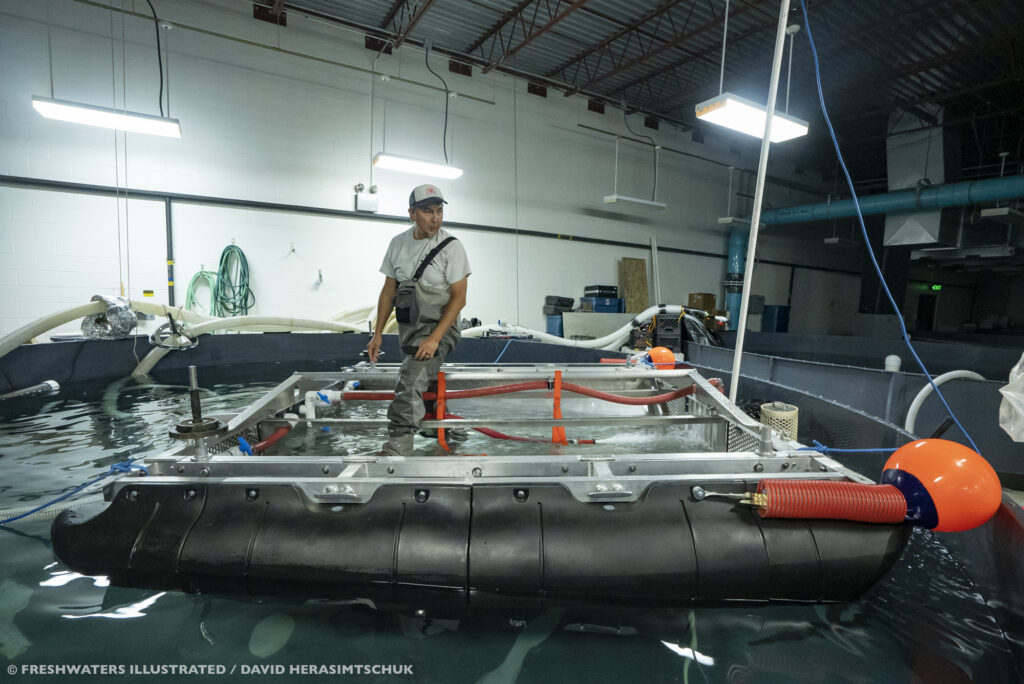
Modern lamprey conservation is a science of creative problem-solving. Two of the most innovative tools we documented reflect just how seriously researchers are taking the challenge.
At a facility in Oregon, engineers from Cramer Fish Sciences demonstrated the Floating Adult Pacific Lamprey Collector Operation Nocturnal—known as FALCON—a system designed to safely intercept and collect adult lamprey in complex river environments, where conventional trapping methods are ineffective. The device operates at night, when lamprey are most active, and represents years of iterative engineering informed by close collaboration with tribal fisheries staff who know these fish intimately.
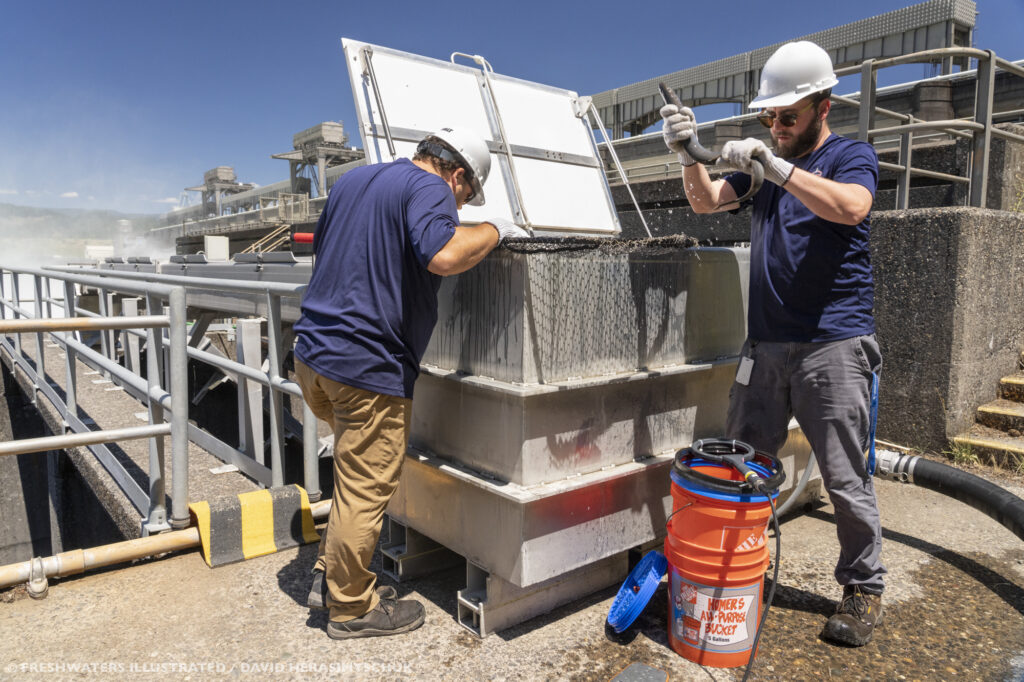
Separately, researchers from Michigan State University introduced a Smart Panel—a sensor-equipped passage assessment tool that provides real-time abundance data as lamprey move through monitored zones. Where researchers once relied on visual counts or manual sampling, this system promises a continuous, non-invasive window into migration patterns. For t ribal monitors who have tracked lamprey runs for generations, tools like this complement traditional ecological knowledge with hard numbers that can inform management decisions.
One of the hardest realities of lamprey conservation is that many of their historical spawning grounds now lie above dams that effectively function as walls. Fish ladders, designed for salmon, are often poorly suited to lamprey’s unique locomotion—they climb by suction, not leaping. So for many fish, the only path upstream is by bucket.
The U.S. Fish and Wildlife Service-led review of trap and haul methods, which we documented at Bonneville Dam, is working to refine protocols that minimize stress and mortality during transport. The imagery captures the scale of the operation and the care with which biologists handle each fish—a care that reflects both scientific rigor and a growing cultural respect for a species long overlooked. Many of these transported fish are destined for tribal reintroduction sites, completing a circle of restoration that is simultaneously ecological and deeply cultural.
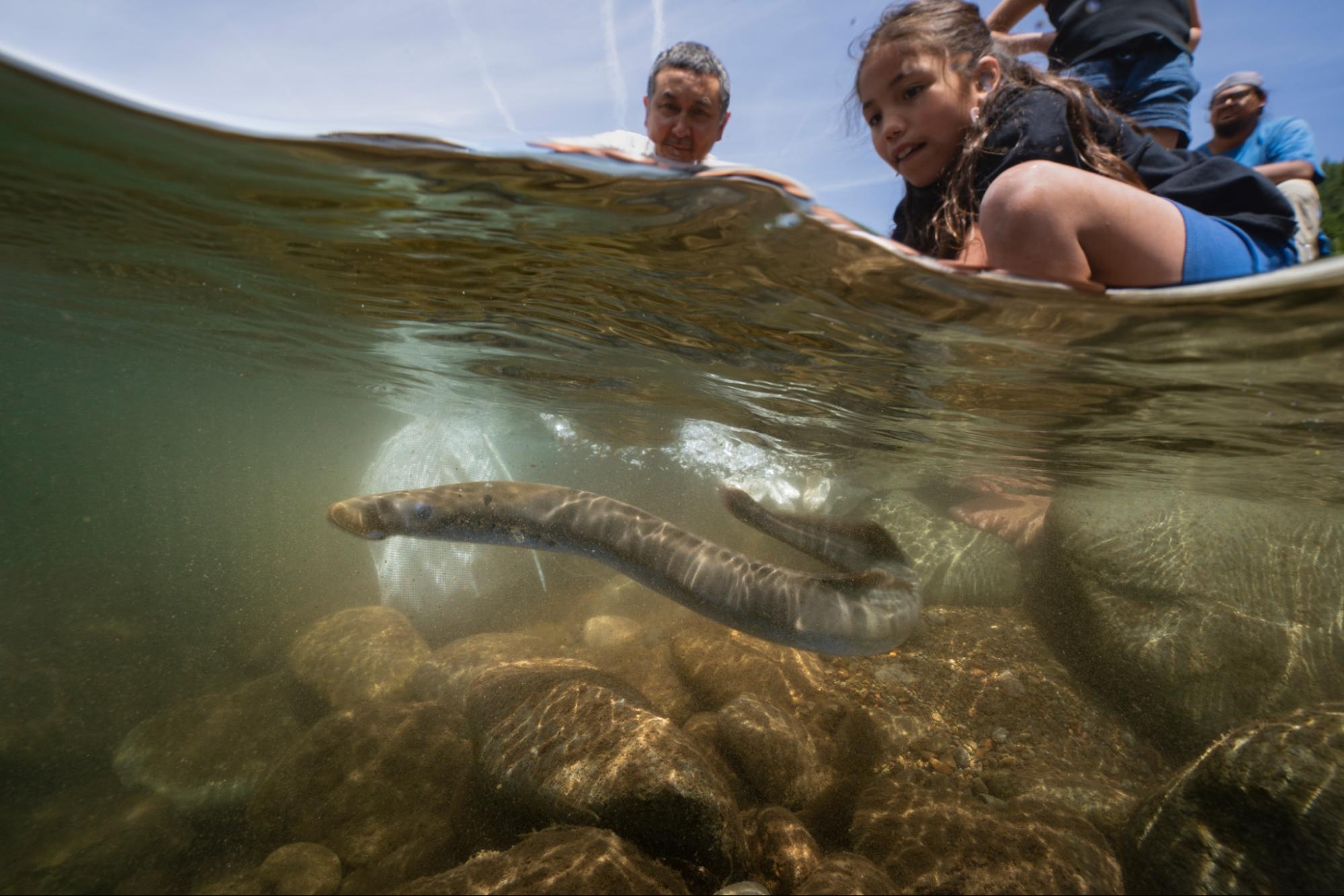
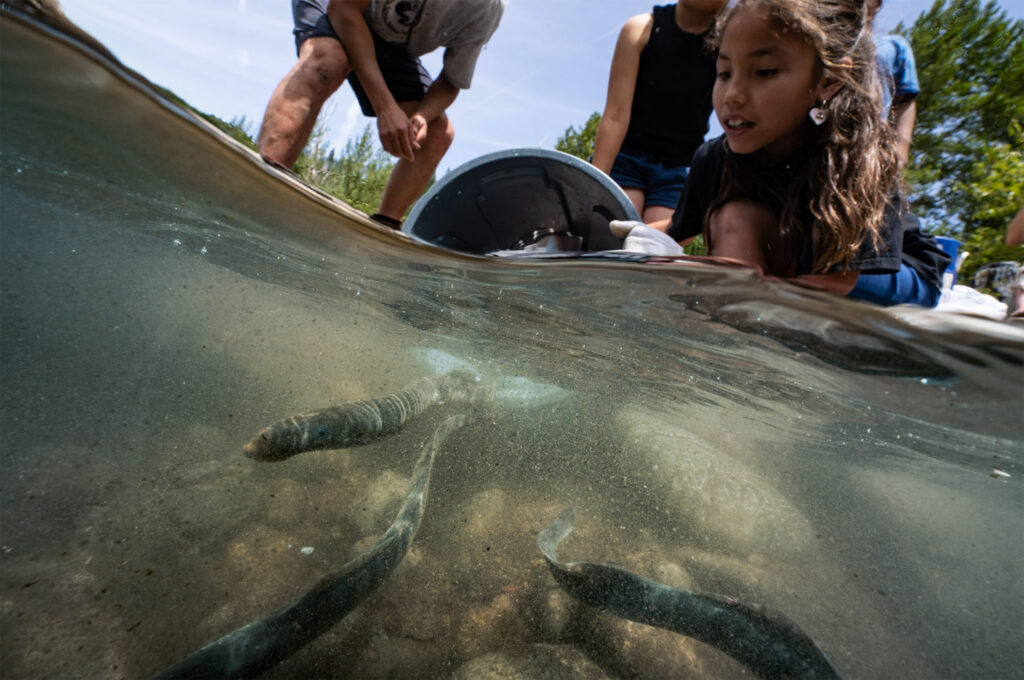
Among the most emotionally resonant work we documented was tribal-led translocation—the act of physically returning adult lamprey to river systems from which they have been absent for decades. In some cases, tribal members travel hours to release fish into waters their grandparents once harvested, waters that have been absent of lamprey for a generation or more.
The return of lamprey to these places is not only a conservation milestone. It is an act of healing. And the response from tribal communities—the reverence, the ceremony, the careful documentation—speaks to a relationship with these fish that no policy brief can fully capture, but that a photograph can begin to convey.
To understand where lamprey go and whether restoration is working, researchers are deploying sophisticated tagging systems that track individual fish through their entire migration. We documented this work in the field, capturing the delicate process of PIT-tagging that allows scientists to gather survival data through the largely invisible downstream and upstream journeys.
We also documented the work of U.S. Fish and Wildlife Service, whose investigation of larval nutritional pathways explores the ecological relationships between ammocoetes and freshwater mussels. This connection—between two of the most imperiled groups of aquatic animals in North America—points to the intricate interdependencies that make healthy river systems function, and that unravel when one piece is removed.
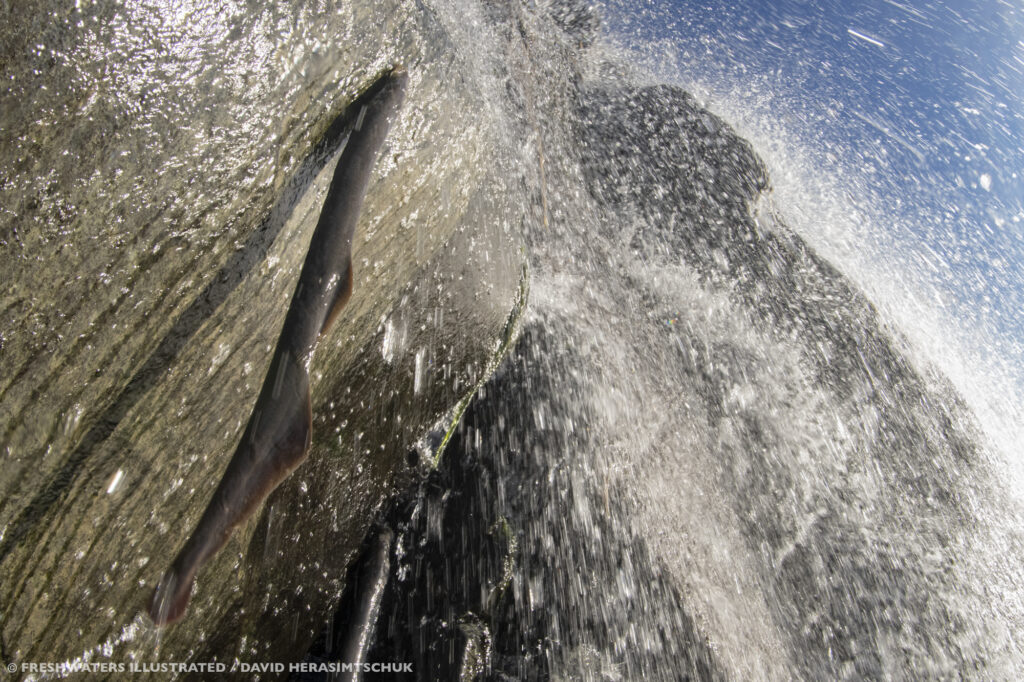
There is no more powerful symbol of Pacific Lamprey’s persistence than Willamette Falls. This 40-foot basalt shelf on the Willamette River near Oregon City has been a lamprey gathering site since long before European contact. The Clackamas people fished here. The Kalapuya traded here. Lamprey climbed these falls by the thousands.
They still do. Against the thundering curtain of water, individual lamprey can be seen pressing their oral discs against the basalt, inching upward with extraordinary muscular effort—ancient biology solving an ancient problem. It is one of the most improbable and moving sights in Pacific Northwest natural history, and it is happening today in the shadow of an old paper mill, twenty miles from downtown Portland.
Our images from Willamette Falls are a reminder of what remains—and what is possible if we choose to protect it.
The Pacific Lamprey does not have the charisma of a salmon or the cultural cache of an eagle. It has no mascot status, no popular following, no box office appeal. What it has is 450 million years of proof that it belongs here—and a network of scientists, tribal stewards, and conservationists who are fighting, methodically and with increasing sophistication, to ensure it has a future.
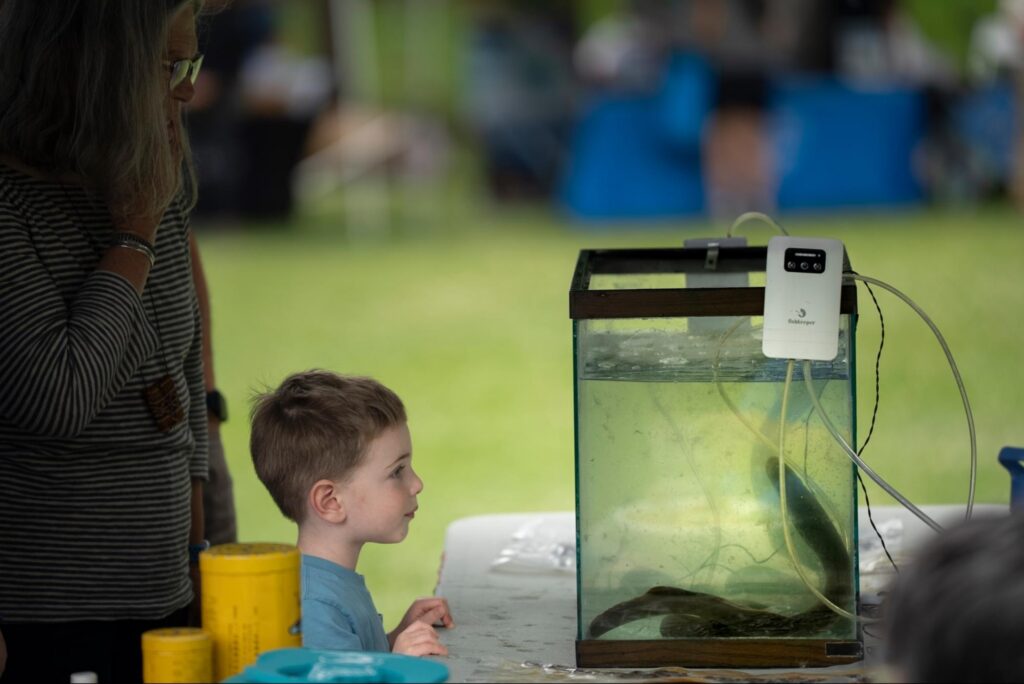
This imagery project exists because stories need pictures. Because the people working to save Pacific Lamprey deserve to have their work seen. Because the fish itself—in all its strange, ancient, tenacious beauty—deserves to be understood rather than feared.
If this story moved you, we invite you to share it. Share it with someone who has never heard of Pacific Lamprey. Share it with a teacher, a policymaker, a friend who loves rivers. The more people who understand what is at stake—ecologically, culturally, historically—the stronger the foundation for the conservation work that must continue.
Pacific Lamprey have been making their way upstream for half a billion years. The least we can do is make sure the river is still there when they return.
All images © Freshwaters Illustrated / David Herasimtchuk and Conrad Gowell / Wild Fish Conservancy. Available under a Creative Commons Attribution-NonCommercial-ShareAlike 4.0 International (CC BY-NC-SA 4.0) license. Access the full portfolio through the online photographic archive. :
This project was funded by the Pacific Lamprey Conservation Initiative / Bonneville Power Administration.