
For thirty years, Wild Fish Conservancy has been surveying streams, ground-truthing maps, and advocating for the rules that protect Washington’s wild fish ecosystems. Central to that work is water typing: the process of classifying streams and water bodies to identify fish habitat—a determination that directly controls the size of protective riparian buffers required during timber harvest and other land management actions. But despite the critical role water typing plays in protecting fish habitat in Washington, the state has relied on an interim rule and inaccurate maps to guide that process for decades.
Washington state’s water typing system dates back to 1975, but it wasn’t until the 1999 Forests and Fish Report that the state introduced a habitat conservation plan and directed the Forest Practices Board to develop a permanent, map-based water typing system. In 2001, the Board adopted an interim water typing rule while the statewide map was being developed, but when that map fell short of accuracy targets in 2005, the interim rule remained in place. What was intended to be a temporary fix lasted twenty-five years.
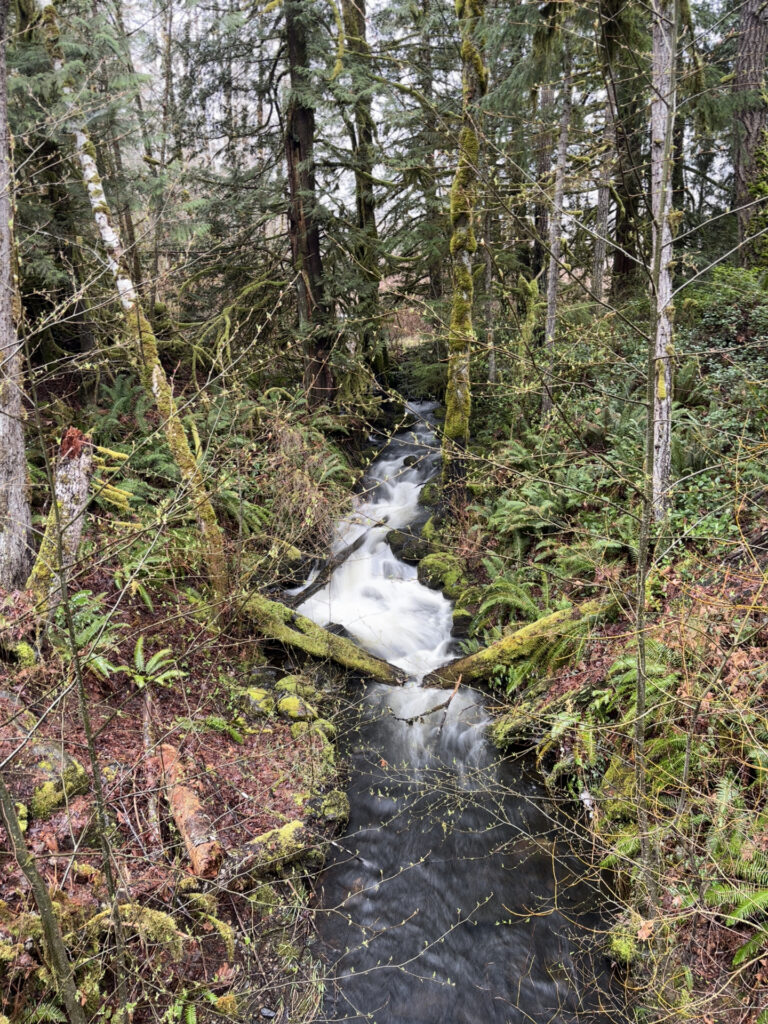
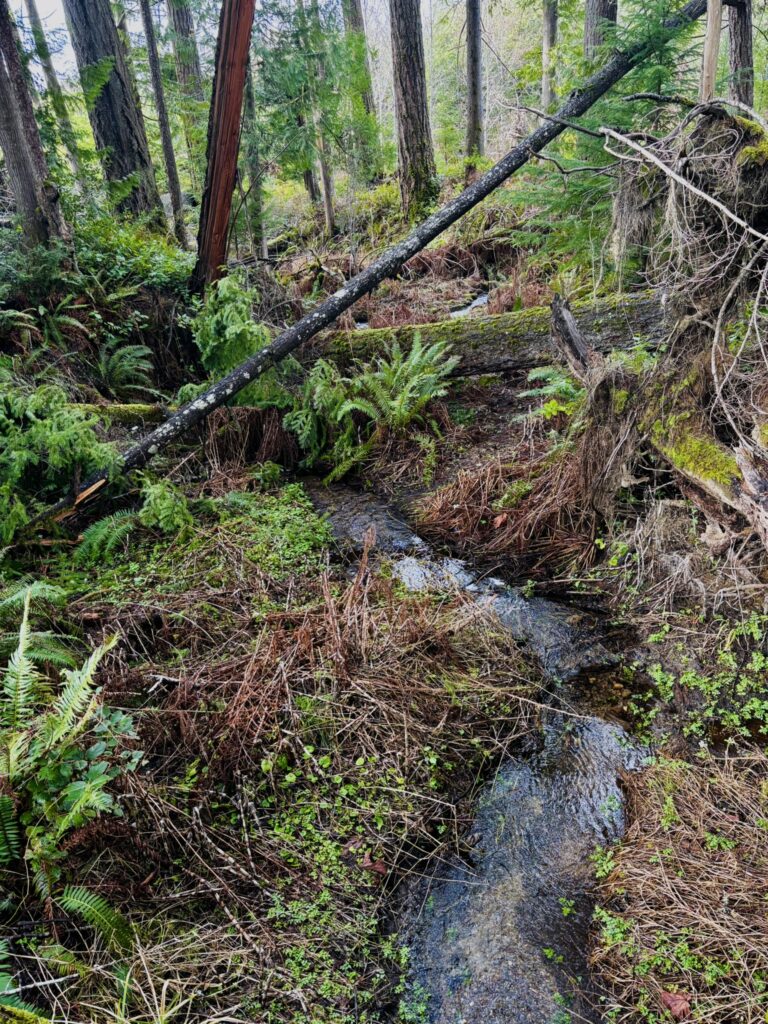
Small streams often provide fish habitat, but when they are overlooked they don’t get the riparian protection they warrant under existing regulations.
In 2011, the Forest Practices Board formally directed its policy committee to prioritize developing a permanent rule, launching the rulemaking process that would span the next fourteen years. Early on it became clear that there was an inability to reach consensus among stakeholders. Caucuses representing Tribes, landowners (timber companies), environmental groups, counties, and state agencies could not agree on several key technical questions, including how to determine where exactly fish habitat ends in a given stream.
Progress was slow and uneven as the Board worked through scientific studies, spatial analyses, cost-benefit reviews, and extensive stakeholder negotiations. Timber industry politics and economics, and the COVID-19 pandemic created additional setbacks. After substantial delay, the Forest Practices Board ultimately adopted the permanent rule in 2025, and it went into effect in March 2026. Guidance for implementing the new rule was also developed and continues to be refined.
Wild Fish Conservancy has played an active role in shaping the new rule. Since 2015, Wild Fish Conservancy staff have provided technical support to the Forest and Fish Conservation Caucus—a coalition of environmental groups working to improve the protection of Washington’s aquatic ecosystems by advancing science-based policy and technical information through the state’s Forest and Fish Adaptive Management Process. That technical support was critical to the Caucus’s efforts to advocate for the replacement of the state’s interim water typing rules and guidance with more scientifically defensible permanent standards.
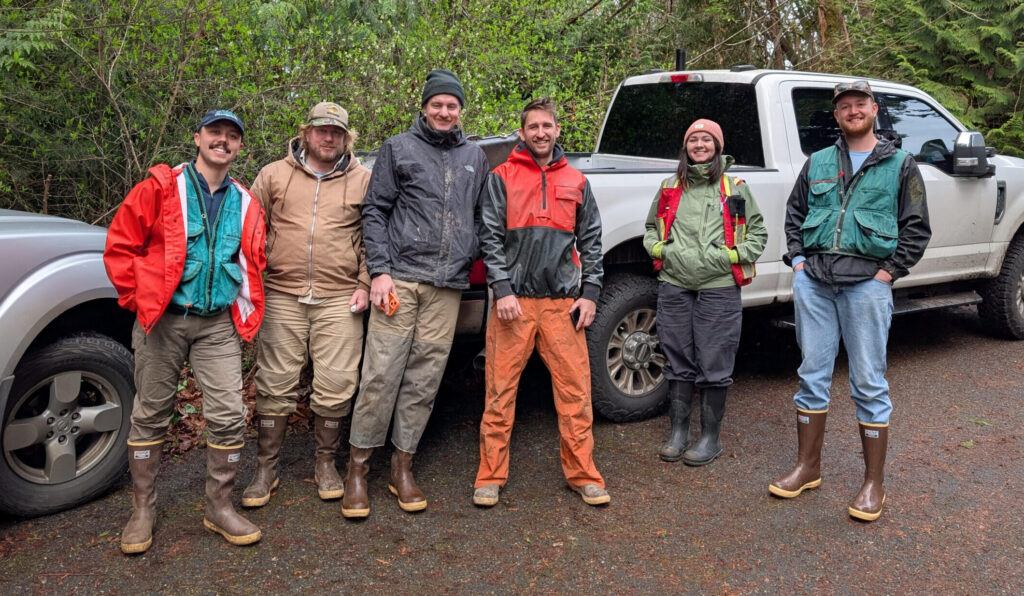
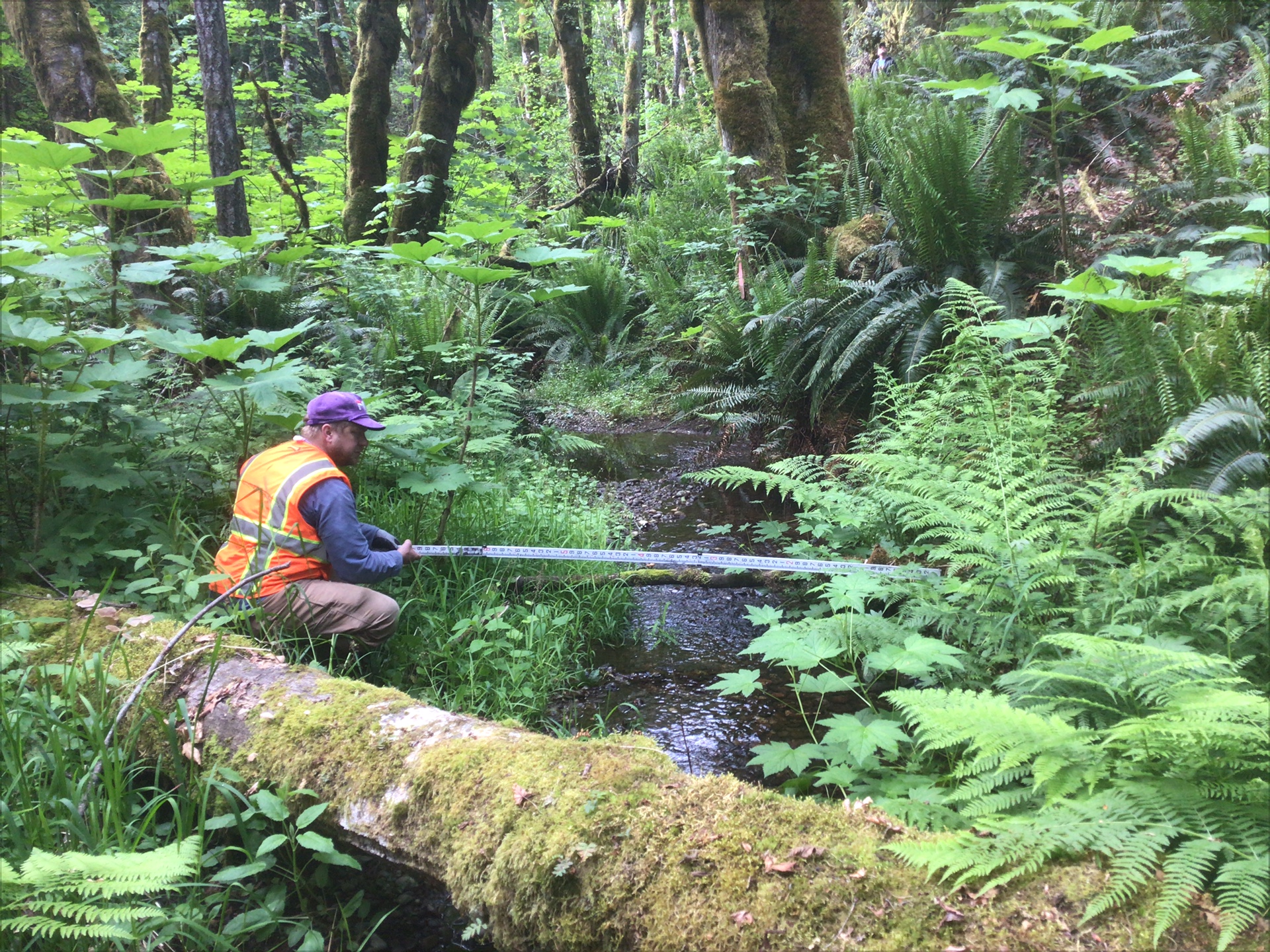
Wild Fish Conservancy field surveyors during a recent field day to review the state’s new water typing rules and guidance.
Whether the new water typing rule and guidance will consistently identify and protect fish habitat and water quality remains to be seen. Beginning in March 2026, Wild Fish Conservancy is testing the state’s new rule in Kitsap Peninsula watersheds and collecting field data that will help improve the rule and guidance in the coming years. Prior to the surveys, Wild Fish Conservancy Biologist, GIS Specialist, and Water Typing Project Lead Aaron Jorgenson provided two full days of field and office training to review the state’s new water typing rule and guidance with staff field surveyors. Jorgenson also updated the digital field data collectors and supporting GIS maps to ensure surveyors have everything they need to accurately map and classify streams and water bodies using the new rule and guidance—right at their fingertips.
With new tools and technology, Wild Fish Conservancy is classifying streams and water bodies more effectively and efficiently than ever. Over the past three decades, Wild Fish Conservancy has completed 125 water typing projects and corrected the classification of over 10,000 stream reaches in Washington state alone—work that has directly improved protections for fish habitat across the region. Wild Fish Conservancy looks forward to testing the new rule and guidance in the field during this year’s water typing season, as well as providing feedback to the state once the season concludes.